
North Korea Dictatorship: Understanding its History and Control
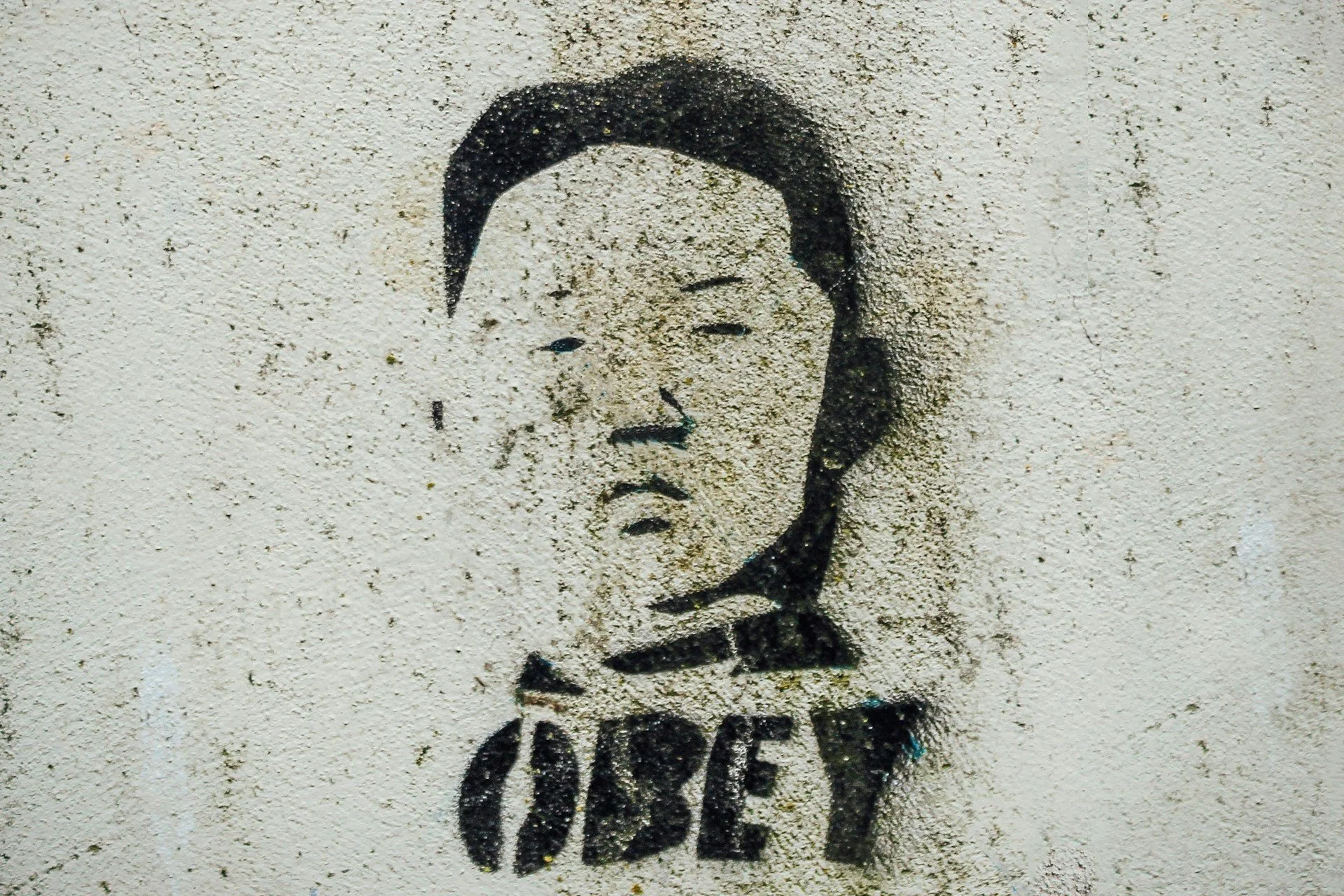
The modern world often associates the terms "communism" and "dictatorship" with repression and authoritarianism. Nowhere is this more apparent than in North Korea. The hermit kingdom’s current form of governance uniquely blends communism and dictatorship, establishing a system that strictly monitors and represses its people. To understand how millions of citizens became isolated from the rest of the globe, we must examine the deep historical and political developments that allowed this regime to take root.
This is a story of absolute authority. The regime has maintained its power through a distinctive way of ruling and a combination of ideological indoctrination, surveillance and repression of dissent. It is a system that guarantees the supreme leader full control of all aspects of North Korean life, from the economy to the media. Without understanding the historical framework of the North Korean dictatorship, it is impossible to fully grasp the severe human rights violations and the subsequent refugee crisis that bleeds across its borders today.
Is North Korea a Dictatorship? Defining the Political System
To accurately define the political reality of North Korea, we must first look at the terminology. A dictatorship is a form of government where absolute power is concentrated in the hands of one person or a small group without constitutional limitations. These often take the form of absolute monarchies, military dictatorships or one-party states. North Korea fits squarely into this definition. Power does not rest with the people or a representative body but is entirely monopolized by the ruling Kim family and their inner circle.
Communism, on the other hand, aims to establish a classless society where the means of production are owned communally. The ultimate goal of this sociopolitical and economic ideology is to distribute goods and services according to individual needs, without the presence of money or state. This concept is rooted in the works of Karl Marx and Friedrich Engels, who envisioned a society where workers have control and there is no class hierarchy. While North Korea was recognized as a full-fledged Communist state in 1949, it quickly warped these foundational socialist ideals to serve a totalitarian agenda. The country effectively abandoned any genuine pursuit of a classless society in favor of a rigid hierarchy designed to serve one man.
Is North Korea a Dictatorship Country? Clarifying the Terminology
Despite the official name of the nation being the Democratic People’s Republic of Korea (DPRK), there is nothing democratic about its operations. The nation is undeniably a dictatorship. When Kim Il-sung established control over the northern half of the Korean peninsula after World War II, he did so with the support of the Soviet Union following the liberation from Japanese colonial rule. He did not establish a system of voting, checks and balances or civil liberties.
Instead, Kim Il-sung isolated and removed political opponents, ensuring his unchallenged rule. This absolute suppression of dissenting voices is the defining characteristic of a dictatorship country. There are no competing political parties allowed to hold meaningful power, and the citizens have no legal mechanism to change their leadership. The government dictates where people live, what they eat, what jobs they perform and what information they consume.
How Did North Korea Become a Dictatorship? The Formative Years
The path to absolute control was neither accidental nor overnight. It required a calculated dismantling of opposition and the strategic backing of foreign superpowers. The formation of the North Korean Bureau of the Communist Party of Korea in 1945 was a crucial step towards the country’s adoption of communism. This political groundwork allowed a young Kim Il-sung to position himself as the premier leader of a burgeoning socialist state.
Kim consolidated his power by forming the Korean Workers’ Party and becoming its leader. But a political party alone wasn't enough to secure complete dominance. Kim understood that hard power was necessary. He simultaneously built a strong military presence with the Korean People’s Army, which was heavily supplied with Soviet equipment. By marrying political administration with overwhelming military force, the early North Korean government structurally eliminated any possibility for a democratic transition or civilian pushback.
When Did North Korea Become a Dictatorship? The Post-War Transition
North Korea officially adopted its form of dictatorship with the establishment of the Democratic People’s Republic of Korea on September 9, 1948. This specific date marked the beginning of its status as a dictatorship under its founder, Kim Il-sung. Kim became the first premier of the North Korean communist regime and later the chairman of the Korean Workers’ Party.
The transition was cemented in the years immediately following 1948. By 1949, North Korea was recognized globally as a Communist state. It was during this volatile post-war era that the borders hardened and the ideological divide between North and South Korea became a permanent, militarized reality. The regime systematically dismantled any remnants of free enterprise and independent thought, replacing them with a state-run apparatus that governed every facet of daily survival.
The Founding of the Kim Dynasty and Ideological Roots
A dictatorship often relies on a guiding philosophy to justify its authoritarianism. For North Korea, this came in the form of a heavily modified version of socialism. Kim Il-sung declared the Kim Il-sung Thought as the country’s official ideology. This framework was a mix of Marxism-Leninism and Juche ideology, which was heavily focused on self-reliance.
The Juche ideology taught citizens that they were the masters of their own destiny, but only if they exhibited absolute, unquestioning loyalty to their leader. It framed the outside world as a constant threat to Korean sovereignty. By establishing this ideological root, Kim Il-sung developed a significant cult of personality that elevated him to a god-like status within the country. This was not merely political respect; it was forced worship that cemented his absolute rule and laid the foundation for the dynastic succession that would follow.
How Long Has North Korea Been a Dictatorship? A Dynastic Rule

North Korea has been under dictatorial rule since 1948, making it one of the longest-running totalitarian regimes in modern history. Kim Il-sung ruled the country continuously until his death in 1994. But his death did not mean the end of the dictatorship. Because he successfully laid the foundation for dynastic succession, he ensured that the regime would pass its power down to his son, Kim Jong-il, and subsequently to his grandson, Kim Jong-un.
This generational transfer of power is highly unusual for communist states, which typically rely on party committees to select new leaders. The Kim dynasty, however, functions much like an absolute monarchy. For over seven decades, the people of North Korea have known no other form of leadership. They have been born, raised, and have died entirely under the shadow of a single family whose grip on the nation has only tightened with each passing generation.
Why Is North Korea a Dictatorship? Mechanisms of Control
A regime does not survive for nearly 80 years through charisma alone. It requires brutal, systemic mechanisms of control to prevent uprising. The North Korean government maintains its power through a combination of ideological indoctrination, surveillance and repression of dissent. Fear is the primary currency. Periodic purges of leadership were deployed to create a sense of instability and unpredictability for the elites, thereby allowing the leader to maintain his hold on power.
No one is safe from this paranoia, not even the highest-ranking officials or family members. In 2013, current ruler Kim Jong-un executed his uncle, Jang Song-thaek. Jang was seen by some as the only person there who could have helped the country introduce reform and openness, and he had spoken dejectedly about people dying of hunger back home. His execution was a clear, violent message to the entire nation that deviation from the supreme leader's will results in immediate death.
The Role of the Korean Workers' Party (KWP)
In North Korea, the Korean Workers’ Party is the sole mechanism for political organization and governance. Formed by Kim Il-sung, the party acts as the central nervous system of the dictatorship. Membership in the KWP is required for any citizen hoping to achieve a measure of social mobility, higher education or a stable career.
The party controls the distribution of resources, the legal system and the military oversight committees. Similar to how the Communist Party of China maintains control over all political appointments with little opposition against the ruling party, the KWP ensures that local and national governance operates in lockstep with the Kim family's directives. There are no independent labor unions or civic organizations; everything flows through the KWP.
The Cult of Personality and Juche Ideology
The physical repression of the North Korean people is matched only by their psychological conditioning. To North Koreans, Kim Il Sung was and still is a war hero, the founder of their nation and a god. His presence in their lives is ubiquitous, and he is still revered today as the “Eternal President of the Republic”. This cult of personality requires that all citizens must keep and maintain a portrait of Kim in their homes. They are even instructed to save this picture should their home catch on fire.
This extreme devotion is heavily tied to the Juche ideology of self-reliance. The state presents the leader as the father of the entire nation. The Kim family is officially treated as the only “parent” that truly matters, demanding ultimate priority over biological families. This ideological framing actively works to redirect natural human loyalties away from the family unit and toward the state.
The Kim Family Succession: Maintaining Power
Maintaining a dictatorship across three generations requires an iron grip on both the political elite and the general populace. Each transition of power was fraught with the potential for collapse, yet the Kim family successfully managed to pass the baton by escalating their authoritarian tactics. The regime ensured that the rule of their family would continue unopposed through the complete centralization of the economy, the media and the military.
When the first transition occurred, the nation went into bitter and heartfelt mourning over Kim Il-sung, as if the universe was turned inside out. Many North Koreans alive at the time cite his death as the beginning of their country’s deepest troubles. Yet, the system was so thoroughly entrenched that Kim Jong-il assumed control seamlessly, followed later by his son Kim Jong-un, the current leader of the DPRK.
Kim Il-sung, Kim Jong-il, and Kim Jong-un
Each leader of the Kim dynasty has left a distinct, tragic mark on the country. Kim Il-sung founded the nation and established the totalitarian framework through purges and labor camps. Following his death in 1994, Kim Jong-il took power during one of the darkest periods in North Korean history. As the country wasted away in the Great North Korean Famine, Supreme Leader Kim Jong Il held pizza parties, was Hennessy’s number one customer and invited pro wrestlers to entertain him.
Kim Jong-un assumed power after his father's death, continuing the legacy of brutality. He quickly moved to consolidate his own power base, engaging in high-profile executions like that of his uncle. Today, Kim Jong-un continues to prioritize military expansion and nuclear posturing while a significant portion of his population remains impoverished and undernourished.
Military and Security Apparatus
A cornerstone of North Korea's longevity as a dictatorship is its massive military and security apparatus. Kim Il-sung initially built a strong military presence with the Korean People’s Army to maintain physical control over the populace. Over time, this evolved into the "Songun" or "Military First" policy, which dictates that the military receives the highest priority in state affairs and resource allocation.
The military is not just used for national defense; it is a tool for internal oppression. The security apparatus acts as a vast surveillance network, turning citizens into informants against their own neighbors and family members. This immense military focus drains the country's limited resources, directly contributing to the poverty and starvation experienced by everyday citizens while securing the regime's power against internal and external threats.
Life Under the North Korea Dictatorship
Daily life for a North Korean citizen is defined by scarcity, fear, and forced loyalty. The state claims that under socialist ideals he provides for every citizen, leaving no space for ordinary mothers and fathers to be recognized as the primary caregivers. In reality, the government's inability to provide basic necessities has forced the populace into desperate survival tactics.
The consequences of the government's failures are visible in the physical health of its people. The World Health Organization defines stunting as the impaired growth and development that children experience from poor nutrition. Because of the severe famines and ongoing food insecurity, a staggering percentage of North Korean children have experienced stunted growth. The average height of a North Korean male is significantly shorter than a South Korean male, a physical manifestation of a lifetime of dictatorial mismanagement.
Human Rights and Surveillance
The human rights abuses in North Korea are well-documented and horrifying. To maintain control, Kim Il-sung created a network of labor camps to “re-educate” those who opposed his ruling. These political prison camps still operate today, holding hundreds of thousands of individuals who are subjected to forced labor, torture, and starvation.
Surveillance is absolute. Citizens are monitored constantly for any sign of disloyalty. This oppressive environment has created a massive refugee crisis. Desperate citizens cross the border into China for food and medical assistance. However, abuse of North Korean refugees in China is rampant as they are labeled illegal economic migrants. Chinese authorities actively seek out vulnerable North Korean refugees to be repatriated and sent to labor camps where they will face execution.
Control Over Information and Media
One of the most effective tools of the North Korean dictatorship is the absolute control over information. During the early stages of starvation and poverty during the Great North Korean Famine the 90s, no information about the outside world was coming into the country. Information was on complete lockdown.
The government controlled all forms of media. Everyday civilians could not turn on the TV or open the newspaper to learn the truth of their desperate conditions or the staggering scope of the disaster taking place on their own soil. North Koreans had no way to call or write letters to anyone beyond their borders, as their phone system was and is still closed to the outside world. Even as death and hunger engulfed the country, North Koreans were told that they lived in paradise and that other places in the world were much worse.
Frequently Asked Questions About the North Korea Dictatorship
Understanding the complexities of the North Korean state requires looking beyond the propaganda and examining the actual mechanisms that sustain the regime. Below are some common questions regarding the nation's economic structure and its standing on the global stage.
What Is the Economic System in North Korea?
North Korea operates under a highly centralized command economy. Theoretically, communism aims to establish a society where the means of production are owned communally and goods are distributed according to need. However, North Korea's implementation has been disastrous.
The government's deep mismanagement and adherence to restrictive policies led to catastrophic failures. During the famine, North Korea’s distribution system did not incentivize its food distributors to make deliveries, and people were being paid regardless of whether their deliveries were met. The state chemically overfertilized and ruined soil integrity, causing farmland to collapse. Today, the state retains complete control over the formal economy, though illegal black markets have emerged out of pure necessity for citizen survival.
North Korea's Relationship with the World
North Korea remains one of the most isolated nations on earth. When the Soviet Union collapsed in 1991, dissolved one of North Korea’s few trade relationships, plunging the country into economic despair. Since then, the nation has relied heavily on China. In fact, China was responsible for 90 percent of North Korea’s trade volume in 2017.
Despite receiving massive amounts of foreign aid over the decades, the North Korean government continually refused outside aid to attain accountable, sustainable means to provide support. The government desires the benefits of international support without guaranteeing that it is reaching the desperate and needy. Because of ongoing nuclear provocations and severe human rights abuses, North Korea faces strict international sanctions, leaving it utterly dependent upon foreign aid and with no method of uprighting its severely broken system.