Kim Il Sung

Kim Jong-suk: The Woman Who Replaced Christmas in North Korea

Kim Jong-suk - “Sacred Mother of Revolution”

As the world gathers for Christmas and sings carols on December 24 to celebrate the birth of Jesus, another kind of reverence takes place on the same date in North Korea. Every year on December 24, Pyongyang celebrates the birthday of Kim Jong-suk, the first wife of the regime’s founder, Kim Il-sung, and the mother of Kim Jong-il.

Kim Jong-suk was born in Hoeryong, North Hamgyong province, near the Chinese border in 1917. Interestingly, she came from a Christian background, which is striking given that her image would later be used to underpin one of the world’s most aggressively atheist regimes (read more on Christianity in North Korea). In today’s North Korea, where religion is banned and owning a Bible can lead to imprisonment, her childhood faith is driven underground, while her birthday elevated to near divine status – a day for North Koreans to worship the “Sacred Mother of Revolution,” an anti-Japanese guerrilla and Communist activist.

December 24 is framed not as Christmas Eve, but as the birth anniversary of revolutionary heroine Kim Jong-suk

FROM ORPHANED BELIEVER TO REVOLUTIONARY MOTHER

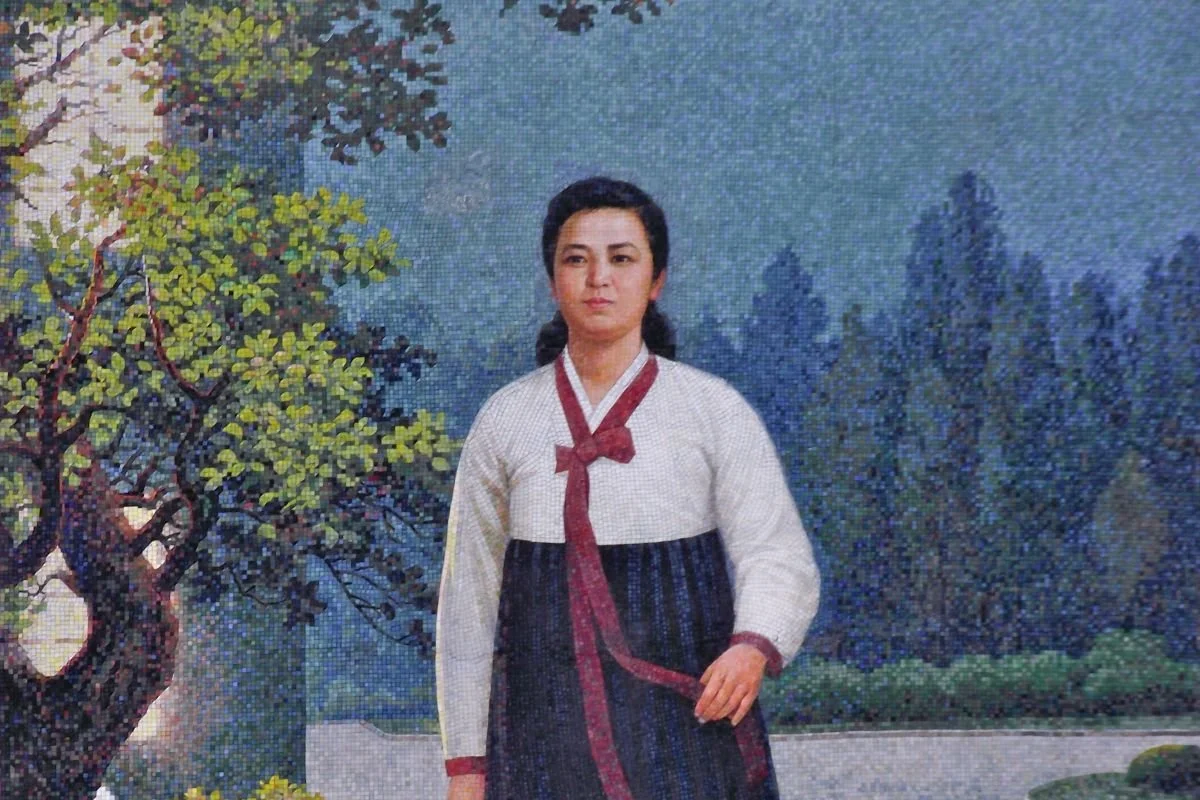
In official North Korean portraits, Kim Jong-suk is rendered in soft tones: dressed in white hanbok, her face glowing with maternal calm. In North Korean propaganda, she is portrayed as not only a revolutionary, but a moral archetype. Her birthplace is now preserved as a “revolutionary heritage site,” a place of pilgrimage for citizens and soldiers who must pay their respects. However, behind the seemingly perfect image she is remembered for as a key figure in linking the country’s founding myth to the bloodline of Kim Il-sung, Kim Jong-il and Kim Jong-un, she had humble beginnings as a young Christian girl.

Kim Jong-suk’s early life was marked by loss and hardship. Her family fled Japanese-ruled Korea for Yanji in northeast China around 1922, scraping by as tenant farmers. When she was still a teenager, both her parents and all her siblings died, leaving her effectively an orphan. This period coincided with an era in which Northern Korea and nearby Manchuria were home to vibrant Christian communities, leading her to establish ties with local churches and placing the young Kim Jong-suk squarely inside a milieu of Bible teaching and prayer even as colonial repression intensified (read more on North Korea as the Christian Hub of the East).

By the mid-1930s, Kim Jong-suk was attached to anti-Japanese rebel units in Manchuria, at first doing support work including cooking, mending uniforms and caring for children, before becoming more directly involved in Kim Il-sung’s partisan network. Meanwhile, in North Korean legend, she famously saved Kim Il-sung’s life during a firefight and is portrayed as both his loyal comrade and selfless caretaker, a narrative that later propaganda would elevate into a hagiography. When many Koreans moved into Soviet territory around 1940, Kim Jong-suk followed Kim Il-sung to the Soviet Far East, where they married and lived on a Red Army base near Khabarovsk. There, she gave birth to their first son, North Korea’s future leader, Kim Jong-il, in early 1941 and later a second son, Kim Pyong-il (often known as Kim Man-il).

With Japan’s defeat, the young family returned to Korea in 1945. As Kim Il-sung consolidated power in the Soviet-occupied North, Kim Jong-suk became de facto first lady of the emerging state. She hosted Soviet officials, appeared at public events and took a special interest in war orphans, helping found what became the Mangyongdae Revolutionary School for children of fallen fighters, a role presented domestically as proof of her maternal virtue toward the nation’s next generation. Her life ended abruptly in 1949, when she died at age 32 due to complications from an ectopic pregnancy.

CHRISTMAS ERASED

As North Korea hardened into a totalitarian state, open Christianity was not only discouraged but criminalized, and the calendar itself was re-engineered to marginalize Christian observances. Christmas celebrations were banned, underground churches persecuted and December turned into a season of intensified political study sessions. 

In this context, December 24 is framed not as Christmas Eve, but as the birth anniversary of a revolutionary heroine, making Kim Jong-suk’s commemoration the official focus of the day. Some historians even note a profound irony: Kim Jong-suk’s Christian upbringing immersed her in ideals of purity and devotion, virtues the regime later repurposed to sanctify its revolutionary ethos. In this stark substitution, her birthday eclipses one sacred nativity with another, from the Virgin Mary giving birth to the promised king Jesus, to Kim Jong-suk delivering Kim Jong-il to secure the Kim dynasty’s royal bloodline.

“Kim Jong-un-ism” and Kim Il-sung's Birthday Celebration

On April 15, 2025, North Korea commemorates the 113th birth anniversary of its founding leader Kim Il-sung. To adventure enthusiasts uninterested in political affairs, this national holiday has morphed into a clever marketing tool for Pyongyang to attract tourists. Tour operators like Young Pioneer Tours and KTG offer exclusive packages to immerse travelers in the grand celebrations of Kim Il-sung's birthday. These tours provide a rare opportunity to witness the nation's meticulously orchestrated military parades, vibrant mass dances held at iconic landmarks across the country and dazzling display of fireworks over the Taedong River, satisfying foreign guests’ curiosity about one of the world's most secretive nations.

At the same time, this event, officially known as the "Day of the Sun," has in the eyes of many, evolved beyond a simple remembrance to serve as a form of political theater orchestrated by Kim Jong-un's regime.

DIMINISHING THE FOUNDER’S SIGNIFICANCE

Building on the subdued tone of last year’s events, this year’s celebration is anticipated to subtly diminish the emphasis on Kim Il-sung's personality cult. Since 2024, North Korean state media has ceased using the traditional term “Sun Festival,” opting instead for the more ambiguous title "April Spring People’s Art Festival." This change was not incidental but rather part of a deliberate strategy. The late leaders, Kim Il-sung and Kim Jong-il, were once deified as "eternal suns" in North Korea’s political discourse. However, after Kim Jong-un ascended to power, he gradually redirected the narrative toward themes of "self-reliance" and "nuclear power," moving away from the absolute deification of his predecessors in an intentional effort to break ties with the legacy of his forebears and construct a political identity that is uniquely his own. 

In parallel, Pyongyang's propaganda has increasingly emphasized the ideology known as "Kim Jong-un-ism" to reduce the significance of anything associated with Kim Il-sung. Even North Korea's annual marathon, originally introduced in 1981 to commemorate the April birthday of  Kim Il-sung, has undergone a name change this year. Previously called the Mangyongdae Prize International Marathon — after Mangyongdae, a Pyongyang neighborhood promoted as Kim Il-sung's birthplace in state propaganda — it is now known as the Pyongyang International Marathon.

CAMBODIA IS FIRST TO CELEBRATE KIM IL-SUNG

With Kim Il-sung's birth anniversary approaching tomorrow, the North Korean embassy in Cambodia was among the first to hold commemorative events this year. This reflects Cambodia's enduring respect for the founder, stemming from his unique friendship with the late King Father Norodom Sihanouk. Forged during the Cold War over shared visions of national sovereignty amidst superpower rivalries, this bond was deeply personal. King Sihanouk, in his 2005 memoir, even described Kim as “my surest and most sincere friend... even more than a friend: a true brother and my only ‘true relative’ after the death of my mother.”

While this historical connection still shapes Cambodia's diplomatic gestures and its close ties with Pyongyang, these overseas commemorations increasingly spotlight the current leader, Kim Jong-un. The focus has clearly shifted from Kim Il-sung's era in recent years. For instance, this year's celebration in Cambodia drew senior government officials and representatives from both the ruling Cambodian People’s Party and the royalist Funcinpec party, according to the Khmer Times. They listened as the DPRK ambassador highlighted Kim Jong-un's dedication to developing a prosperous socialist state. By centering on the current leader’s achievements, such events subtly position Kim Il-sung's legacy more as a symbolic backdrop. This aligns with North Korea's broader narrative, which prioritizes Kim Jong-un's vision for modernization over dwelling solely on reverence for the nation's founder.

As North Korea continues to redefine its political agenda, the April Festival of 2025 underscores the evolving nature of these national celebrations that are interwoven with shifting power dynamics and strategic military maneuvers. As for those eager to travel to the isolated nation to partake in the festivities, they may well find themselves captivated by the elaborate staged performances throughout the holidays. Yet, their presence ultimately serves a deeper purpose – helping the regime reinforce to its citizens the narrative that even foreigners acknowledge and respect Kim Jong-un's leadership.

Staff Notes: North Korean Refugees, Memories, Home

The following post was written by Crossing Borders volunteer staff: Years before I started volunteering with Crossing Borders to serve North Korean refugees and orphans, I remember going on a brief visit to Northeast China with my grandfather. We stopped at a North Korean restaurant staffed by beautiful young North Korean waitresses. The North Korean government owns several restaurants throughout Asia, which are fully staffed and managed by approved North Korean patriots under the employ of their government. My grandfather, a North Korean refugee, who was born in North Korea and still had siblings living there, asked the women about their lives and their families. I knew he took pity on their situations. Although they were living in relative freedom in China they were, essentially, still enslaved to the North Korean government, working long hours for little pay. Yet with frozen smiles and identical expressions, each professed their undying devotion to their homeland and their “Eternal Father” Kim Il Sung. They each wore a small red Kim Il Sung pin on their uniforms and spoke no ill of their leader.

A few years later, I found myself watching a documentary entitled State of Mind, which followed the lives of two young North Korean gymnasts as they prepared with single-minded devotion for "The Mass Games”, a performance held in honor of North Korea's leader. The gymnasts placed all their efforts and hopes into the chance that they might perform for Kim Jong Il. Their months of labor and practice resulted in a flawless performance. But on the day of the Games, the Supreme Commander failed to show. , The disappointment and pain in their eyes was evident.

Many of the North Korean refugees assisted by Crossing Borders long to return to their homes in North Korea. Though they have been informed that their leaders Kim Il Sung, Kim Jong Il and Kim Jong Un are not gods, that North Korea is not paradise on earth, their home still beckons them from a distance. Memories and shared histories are still too powerful to forget. This is perhaps why my own grandfather remains drawn to any news about his former home, why he continues to travel along the border between China and North Korea, hoping to catch glimpses of any North Koreans on the other side.

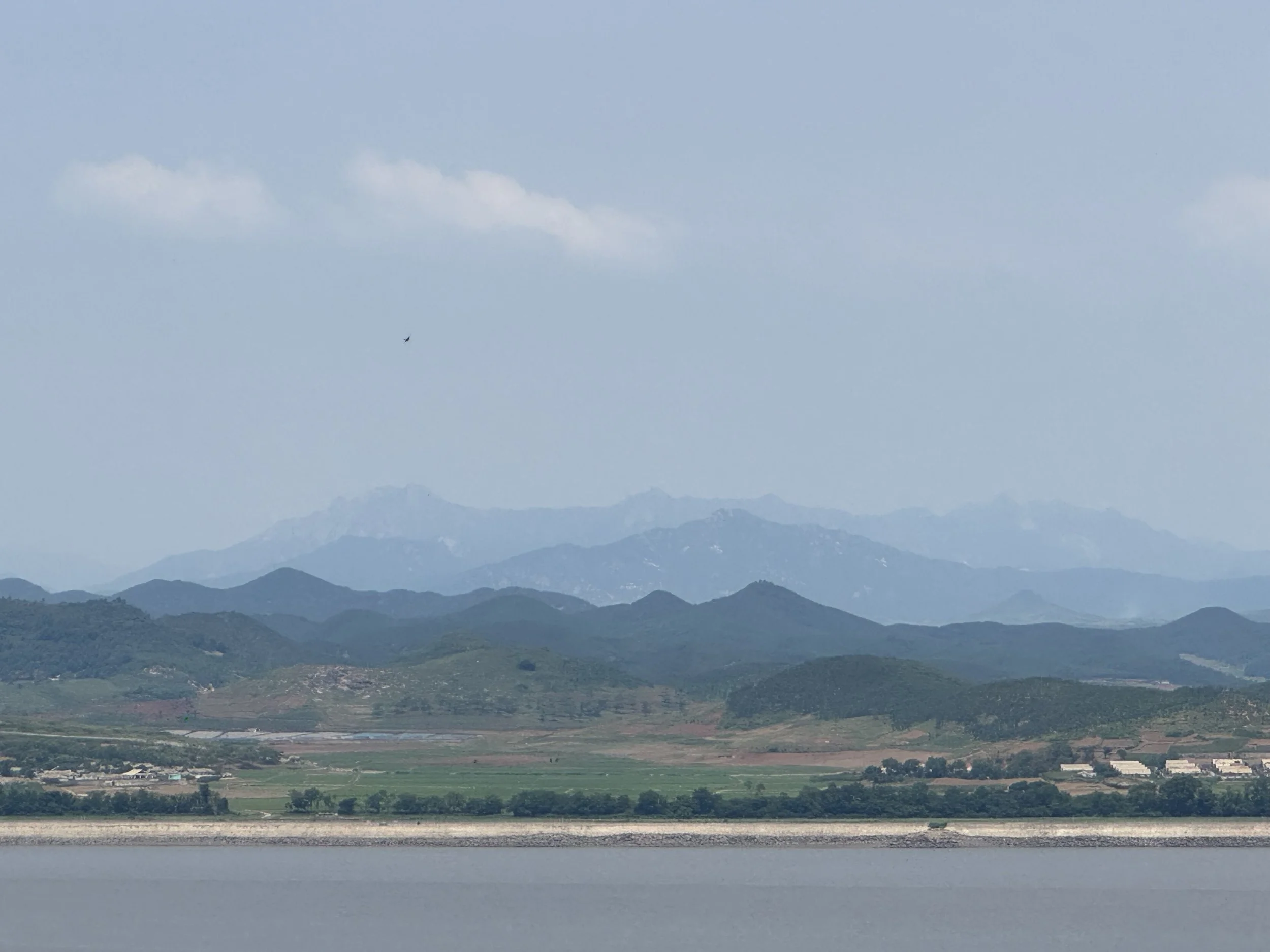
On one of our visits, while riding a tourist ferry along the Tumen River, we happened to see some North Korean children playing in the water. They were close enough that we could hear their laughter. My grandfather reached out his arms and wistfully remarked that he wished there was something he could give them. Only half-joking, he thought of throwing them small bags of rice or money. But soon our small tour boat turned around and we were headed back, moving further and further away from the shores of North Korea.

Prayer for North Korean Refugees: Isolation

One of the most striking things about North Korean refugees is how separated they have been from mass media and the rest of the world. When ministering to them, we must first address the lies they have been fed their whole lives by their government. The North Korean regime is relentless in cutting its people off from the outside world. They tell its people that other countries are terrible places to live and that North Korea is paradise on earth. With no information to refute this, the people generally believe it. It is a nation known for its mind-numbing propaganda.

But change is coming to the Hermit Kingdom. As North Korean refugees like the ones in the care of Crossing Borders travel in and out of the country, they bring with them news from the outside world. DVDs (or VCDs) are creeping past the nation's borders. People are smuggling in small USB drives with Korean dramas and international news reports that are usually only accessed by North Korea’s elite.

One booming industry in North Korea operates along the China-North Korea border as North Korean refugees and businessmen sneak cell phones into the country. These are not North Korean cell phones, which can only access other phones in the country’s tightly monitored network. They are phones that can access China’s cell phone network from inside North Korea. With these phones North Koreans can call family in South Korea.

North Korean refugees in China tell us that North Koreans are not so much interested in the things that most people from the outside world are. The plot lines of South Korean dramas can be entertaining, but most North Koreans are fascinated by the standard of living portrayed in the background of these programs. The city lights of Seoul, the plentiful food on the table, the nice apartments and new, clean clothing that people wear in these videos are what North Koreans are really drawn to.

As North Korean refugees come into our care, it is fascinating to see the transformation that takes place in them. One refugee, after spending years living in China, told us that she still thought the North Korean government is still the best in the world. The nation just needed food. But as time passed our refugee changed in her views. Eventually she told us, “North Korea just needs God.”

As we continue to chip away at the lies of the North Korean government something profound happens within the North Korean refugees we help. They begin to shift away from their worship from Kim Il Sung to recognizing and submitting to the authority and worthiness of Jesus. This is a slow and arduous process, which takes much time and many resources. But it’s why Crossing Borders exists.

Please pray for us as we continue in this work of ending deception and bringing the light of truth to the North Korean refugees and their people who have been isolated from the rest of the world.