

In recent years, cinematic portrayals of North Korea have begun to undergo a significant transformation. Where once global audiences were introduced to a stylized, romanticized version of the North through glossy productions like Crash Landing on You, a new wave of storytelling is emerging – one that is more restrained, more uncomfortable and arguably more truthful. Films like Choir of God hinted at this shift. Now, the film Hana Korea pushes it further.
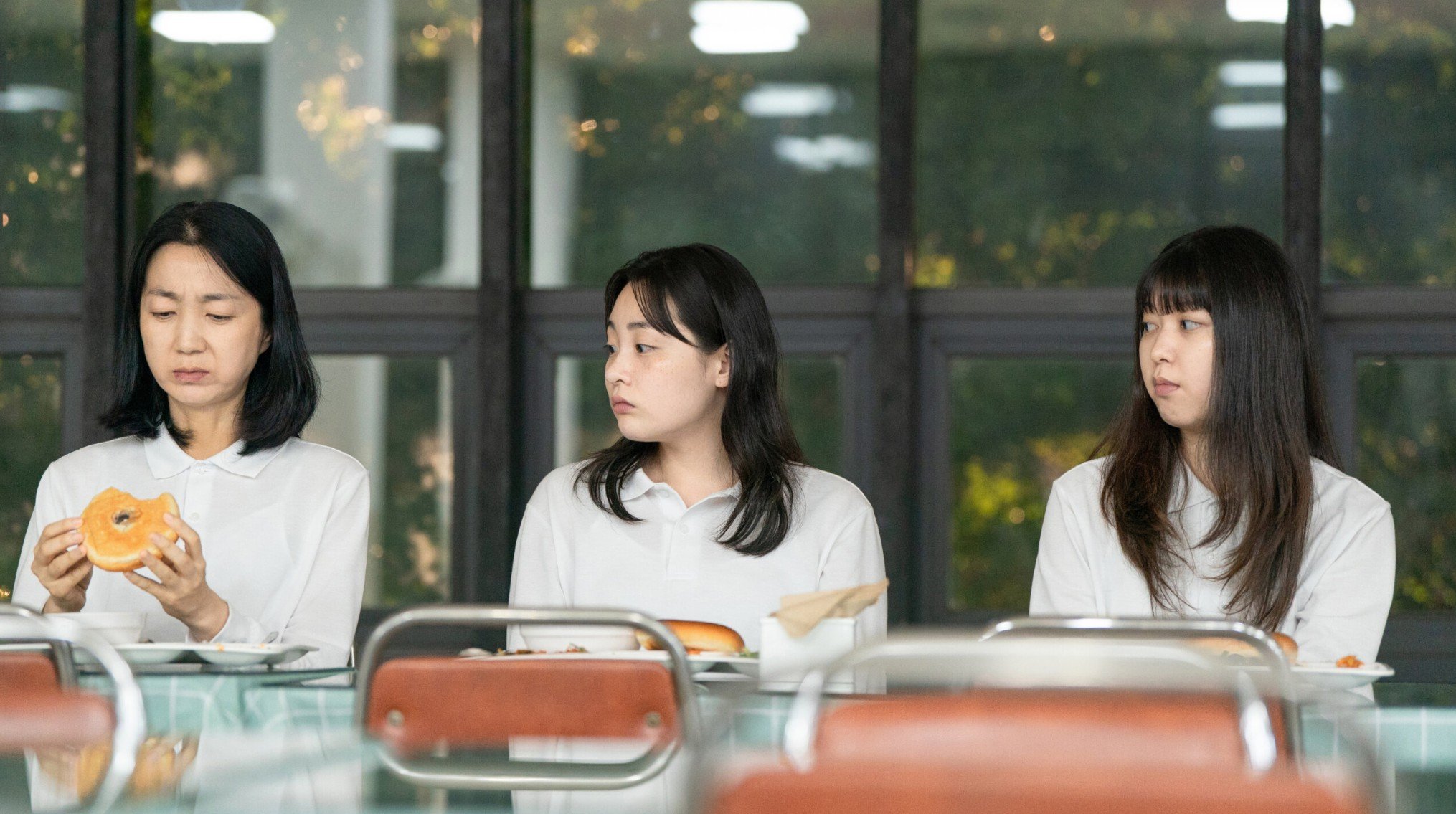
Hana Korea, 2025
First screened at the Busan International Film Festival in September 2025, Hana Korea is scheduled for its theatrical releases in South Korea this July and Denmark in August.
A STORY THAT FEELS UNCOMFORTABLY REAL
At its core, Hana Korea tells the tragic yet inspiring story of Hyesun, a North Korean woman who makes the irreversible decision to leave her country, not for freedom in the abstract, but for something far more immediate: to save her dying mother. Her journey begins with a desperate escape, swimming across a body of water into China, where she spends nearly two years living on a farm alongside other defectors, enduring a precarious existence defined by fear, exploitation and survival. Eventually, she is rescued by South Korean humanitarians.
The film opens not with her escape, but with her arrival on an airplane, where South Korean officials approach her. From there, she is taken into interrogation and then into Hanawon. The name of this settlement support center for North Korean refugees itself carries symbolic weight: Hana meaning “one,” and Won meaning “facility,” reflecting a quiet longing for reunification.
Inside Hanawon, Hyesun undergoes an intense, condensed resettlement process. Over the course of 30 to 40 minutes of screen time, audiences witness her from learning to use smartphones and preparing for employment, to adapting to cultural norms that feel entirely foreign. In rare, intimate moments, she is seen playing the drums alone, hinting at a past she did not seem to have, as learning drums in North Korea typically requires a comfortable family background. It is here that she forms two relationships that anchor the film emotionally:
An older companion: a woman forced to leave behind a son while fleeing China, whose portrayal closely mirrors the experiences of defectors under Crossing Borders’ care.
A younger friend: a cheerful woman in her early twenties born in China to North Korean parents. Having never lived in the North herself, she brings an almost dissonant brightness, persistently trying to lift Hyesun out of her emotional isolation.
STRUGGLES AND AMBITIONS IN THE NEW WORLD
When Hyesun transitions into South Korean society, the tone shifts. Her singular focus is to earn money to send back home for her mother’s medical treatment. She makes frequent phone calls to a contact in North Korea who coldly pressures her about whether she has the money yet. Despite her minders advising her against studying to become a nurse and instead urging her to settle for low-level cleaning jobs due to her lack of formal education in the North, Hyesun is fiercely determined to make this dream come true. However, she quickly discovers that life in South Korea is far from the idealized world she saw in smuggled K-dramas. The city she now calls “home” feels vast, indifferent and at times hostile. She faces intense prejudice, where locals recognize her accent and subject her to racist remarks, discrimination and even sexual harassment. Out of profound shame and fear, she erases her own identity and begins to claim to be Chinese or South Korean. Anything but North Korean.
As Hyesun juggles work and study, the film begins to reveal the deeper layers of her trauma. This reflects the grim reality many North Korean women in China experience—including sexual violence, forced relationships, and coerced motherhood. Her greatest burden, however, is not only what was done to her, but what she did to survive. After secretly saving money for her mother, her stash is discovered by a farmer. In a moment of desperation, she deflects blame onto another defector. The other woman is implied to have been executed as a result, and Hyesun carries this guilt into her new life in the South, where it manifests as emotional paralysis.
Hyesun eventually confesses the truth to her older companion, confronting the weight she has carried in silence. It is not a moment where she can directly ask for forgiveness from the person she wronged, but of acknowledgment. There is, perhaps, a faint echo here of a familiar, profound spiritual posture: not a desperate plea to earn forgiveness, but an honest confession before God, made possible because forgiveness has already been fully accomplished through Christ’s sacrifice on the cross. In that light, Hyesun is finally able to move forward, freed from the crushing weight of guilt.
By the end of the film, Hyesun achieves what once seemed impossible. She begins her clinical rotation and, in a simple yet powerful scene, while caring for an elderly patient, she is once again asked about her accent. This time, she does not hide. She states plainly: "I am from North Korea." It is a quiet declaration, but one that signals the end of her internal exile.
FILM CRITICISM AND the north korean REALITY
Interestingly, Hana Korea has generated notable discussion in China, particularly among viewers in Beijing. A number of Chinese critics have dismissed the film as a “shallow” and “monotonous” narrative. Common criticisms describe the story as a mere “laundry list” that portrays a flat sequence of events—focusing heavily on surface-level details like attending classes, finding jobs, using credit cards, and saving money. Others commented on the distinct lack of dramatic tension, especially when compared to highly dramatized, Hollywood-style depictions of defection.
However, this critique may unintentionally point to the film’s greatest strength. For many North Korean defectors, this is the reality. Life after arriving in South Korea is not defined by constant pursuit or high-stakes espionage. It is unfortunately defined by isolation, routine and the exhausting effort of assimilation. Emotional processing is delayed and survival becomes administrative: learning systems, earning income and navigating identity.
In this sense, Hana Korea marks a meaningful evolution in how these stories are told—moving away from extraordinary escape thrillers to honor the deeply human, often painfully ordinary lives of those walking the long road to restoration.