
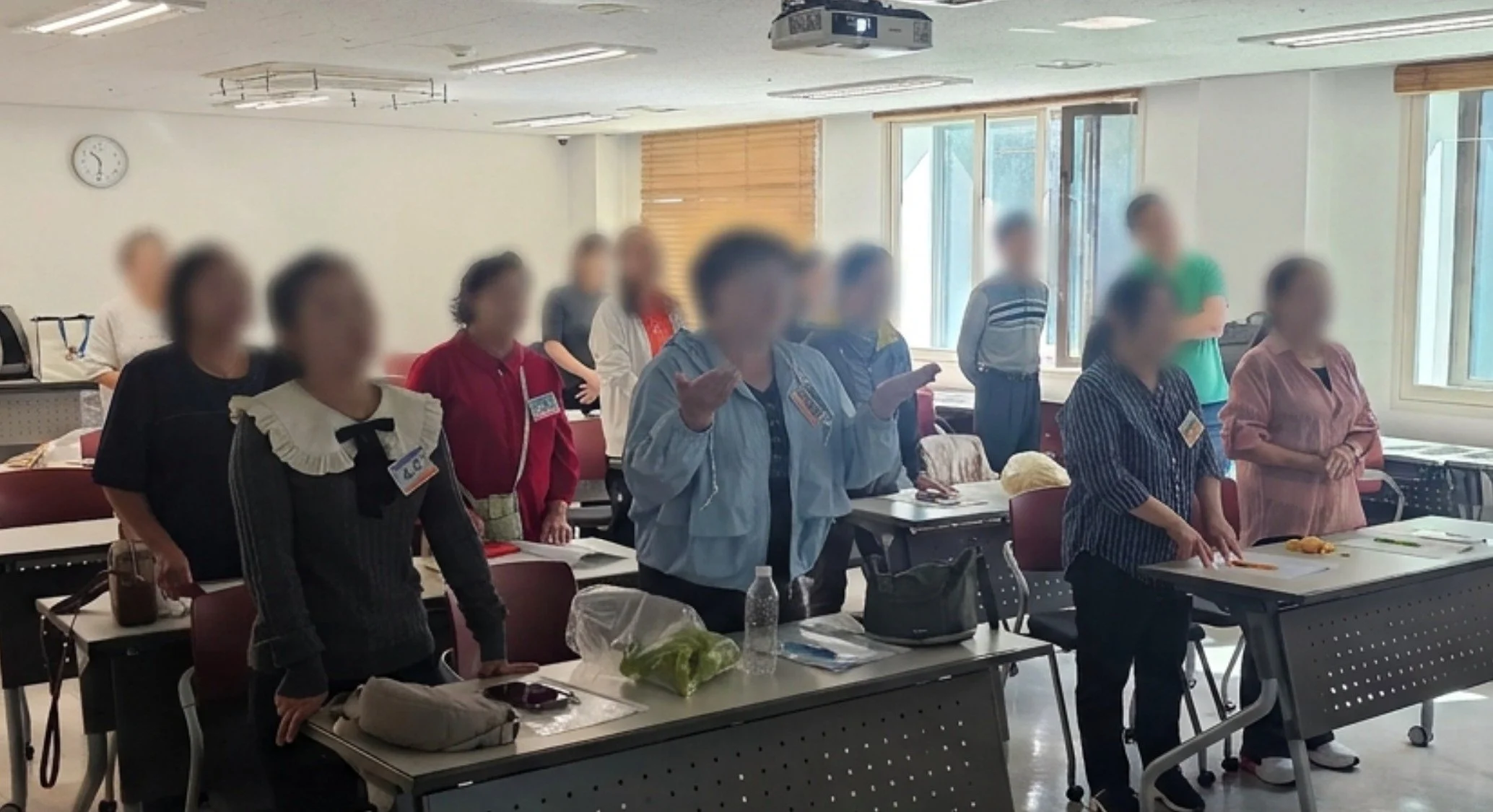
North Korean refugees worshipping together at our 2025 Fall Retreat in Korea
As highways across South Korea clog with millions traveling to their ancestral hometowns and dining tables fill with songpyeon (half-moon rice cakes) and braised short ribs, Chuseok—the mid-autumn harvest festival—signals a time to celebrate abundance and familial connection.
However, for many of the roughly 34,000 North Korean defectors living in the South today, Chuseok serves as a painful reminder of everything they left behind. During this holiday, many defectors sit alone in quiet, solitary apartments. Though they have achieved physical freedom, they often fall victim to a silent, secondary entrapment: profound isolation. To truly understand why defectors struggle so deeply with loneliness and high suicide rates in a prosperous democracy (read more on North Korean Defector’s Decomposed Body Found in Home), we must look back at the world they escaped—a society where interdependent personal networks were the only means of physical survival.
The Iron Grip of North Korean Networks
In a highly individualistic society like South Korea, a person can easily live anonymously. But in North Korea, anonymity is impossible and isolation is dangerous. As former British ambassador to North Korea John Everard observes, personal ties are everything in the North. Under a system defined by state surveillance and strict law enforcement, citizens survive through a complex, sprawling web of relationships.
Mutual Survival and the Necessity of Trust
"Friend" carries a vastly different meaning north of the DMZ. Friends exchange unofficial information, news, and foreign media—exposures that carry severe penalties. Because one person’s denunciation could wreck the lives of an entire group, complete trust was essential for survival. Beyond tight-knit circles, defectors relied on broader contact networks, using favors, cigarettes, or luxury goods as everyday currency. These networks served three critical purposes:
Early-Warning Systems: Timely alerts against unexpected state inspections or security crackdowns.
Sources of Unofficial News: Crucial channels for truth in a nation dominated by state-run propaganda.
Shields for Mutual Protection: Shared accountability that protected individuals from arbitrary punishment.
The Pivotal Role of the Inminbanjang
At the center of this neighborhood network is the inminbanjang—the head of the local neighborhood unit. Tasked with monitoring apartment blocks and reporting illicit activity, these grassroots leaders (invariably women) wielded immense influence over daily life. Popularized in the K-drama Crash Landing on You, village women routinely offered their local leader home-cooked meals, smuggled goods, and helpful favors to keep late-night inspections trouble-free.
Maintaining strong ties with the inminbanjang could mean the difference between an overlooked violation and a labor camp. For average North Koreans, community was never a luxury or simple social preference; it was their armor for daily survival.
The Culture Shock of Solitude in the South
When defectors arrive in South Korea, that social armor is abruptly stripped away. While free from state surveillance, they also lose the tight network that once gave their lives structure, protection, and connection. They no longer need to appease a neighborhood monitor or form a secretive circle just to survive.
From Interdependence to Isolation
The sudden shift from intense interdependence to an individualistic culture where neighbors rarely interact in an elevator creates severe shock. This transition is especially heavy for individuals carrying severe escape trauma and the agonizing guilt of leaving family behind. Unchecked, this profound solitude contributes to tragic cases of "lonely deaths" and persistent mental health challenges.
Psychological Impacts on Defector Families
The burden of resettlement affects entire families across generations:
Elevated Risk of Illness: Research indicates North Korean defector children are 1.3 times more likely to develop mental health conditions than their South Korean peers due to early developmental stress.
Persistent Trauma: Youth defectors face a 1.3 times higher risk for major psychiatric disorders, including PTSD, depression, and ADHD—risks that can persist for more than 15 years after resettlement.
Without supportive relationships, physical freedom alone can feel disorienting and painfully empty.
Rebuilding Hope, Healing, and Community
If community was once a mechanism for physical survival in North Korea, it is the cornerstone for emotional and spiritual healing in the South. True restoration cannot happen in isolation; defectors need safe, trustworthy communities where they can process trauma and build a meaningful future.
Restoring Belonging at Elim House
Within welcoming spaces like Elim House and through regular community gatherings, refugees discover a supportive environment where practical care, emotional healing, and quiet spiritual guidance come together. Here, defectors learn that they no longer have to carry their heavy burdens alone.
As Chuseok approaches—a time when the contrast of isolation is felt most acutely—these restored relationships serve as a vital lifeline. By extending Christ-like compassion and holistic support, we walk alongside North Korean defectors, guiding them away from solitude and into genuine, lasting freedom and belonging.
“3 Blessed be the God and Father of our Lord Jesus Christ, the Father of mercies and God of all comfort, 4 who comforts us in all our affliction, so that we may be able to comfort those who are in any affliction, with the comfort with which we ourselves are comforted by God.”
In the coming weeks, we will retreat for a few days with refugees in South Korea who live in this pain. As Paul prayed to our God, the Father of mercies and God of all comfort in 2 Corinthians, we pray for the loving comfort of our heavenly Father on the refugees at our upcoming Fall Retreat.