
Resentment starts small. For one North Korean woman, who we call Anabelle, it began in her youth. When her mother would try to beat her, not an uncommon form of discipline, she wouldn't just stand there and take it. Anabelle would run and escape the situation. Looking back, she realizes that same defiant spirit was likely the root of her early resentment toward the North Korean government.
That defiance eventually led her across the border to China in search of a way to earn money. She wasn't alone; her two sisters were with her. But the journey was cut short. All three were caught and forcibly repatriated to North Korea.
Forced Labor and Repatriation from China
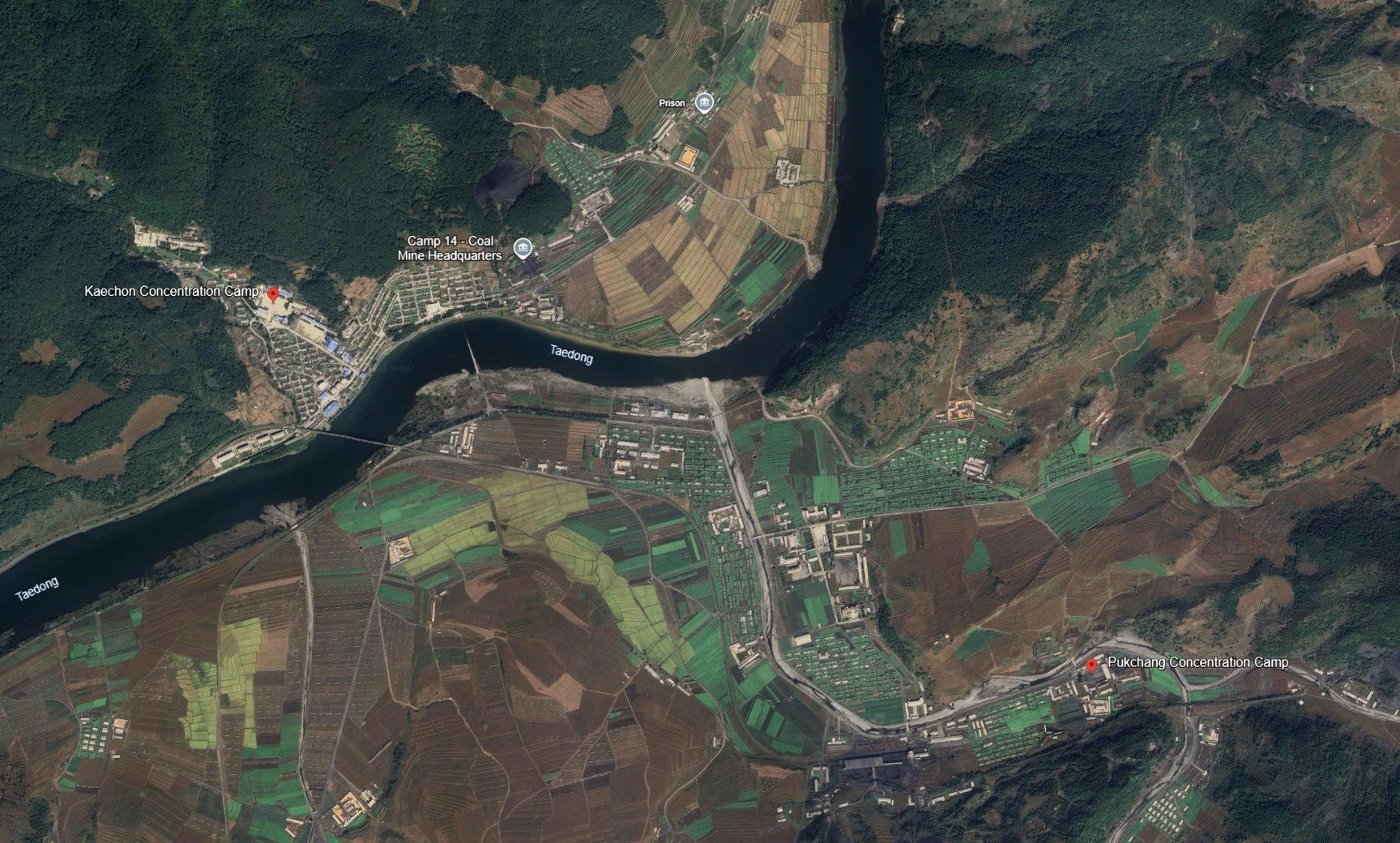
Anabelle and her youngest sister were sent to a Danryeondae (labor training camp). The conditions were not merely difficult; they were designed to break the human spirit. She recalls carrying stones as large as her own body on her back. If you didn’t run while carrying them, you were whipped without mercy.
The nights offered no reprieve. Once, they were forced to move piles of heavy logs in the dark of the night. Because they couldn’t see, people were frequently crushed between logs, many were severely injured; some even died. The routine was a relentless cycle: back-breaking labor by day, and forced ideological education by night. It was, in her words, a living hell.
The turning point came at a river. Because they were never allowed to bathe, the guards finally granted a brief moment for the prisoners to wash in the water. When her youngest sister saw an opening, she ran and successfully escaped. Anabelle, the one stayed behind, was subjected to intense public criticism for her sister’s "betrayal." She finished her remaining three months of forced labor and returned home, where she lived for another five years before finally making it out of North Korea for good.
The Harsh Reality of Resettlement
When she eventually reached South Korea, Anabelle was able to escape with her entire family. Her children were 18 and 19—old enough to understand the gravity of their situation, but young enough to be shattered by the transition.
Settling in the South was a new kind of war. To survive, she took any job she could find, working herself to the bone. In the frenzy to provide, she couldn't look after her children the way they needed. The toll of their displacement hit home when she learned her son had climbed to the top of a 15-story apartment building, contemplating the end.
The "success" of resettlement wasn't immediate. It was a long, painful period of adaptation for the whole family. Today, the situation has stabilized. Both children are married and have children of their own. Reflecting on those years, she now sees clearly how much a parent’s guidance, and often the unfortunate absence of it, shapes a child’s life.
An Honest Look at Defectors in South Korea
Her perspective on the North Korean refugee community is complicated and brutally honest. Anabelle observes an unhealthy habit of "receiving" among her peers. There is an intense fixation on cash support and free supplies. She sees it in her own family; her mother and sister attend church, but she feels they are "following the money" rather than the faith.
The desperation for resources has, at times, turned dangerous. Anabelle recalls a time when a mental health clinic was distributing free meat. In the chaotic scramble to get a share, people were pushed and trampled. She was caught in the middle and ended up with a broken rib.
As a refugee herself, she finds this reality heartbreaking. She sees her people who have become so accustomed to being "given" things that the drive for independence is often overshadowed by the habit of survival. It is a raw, lingering side effect of a life spent in pursuit of the most basic human needs.