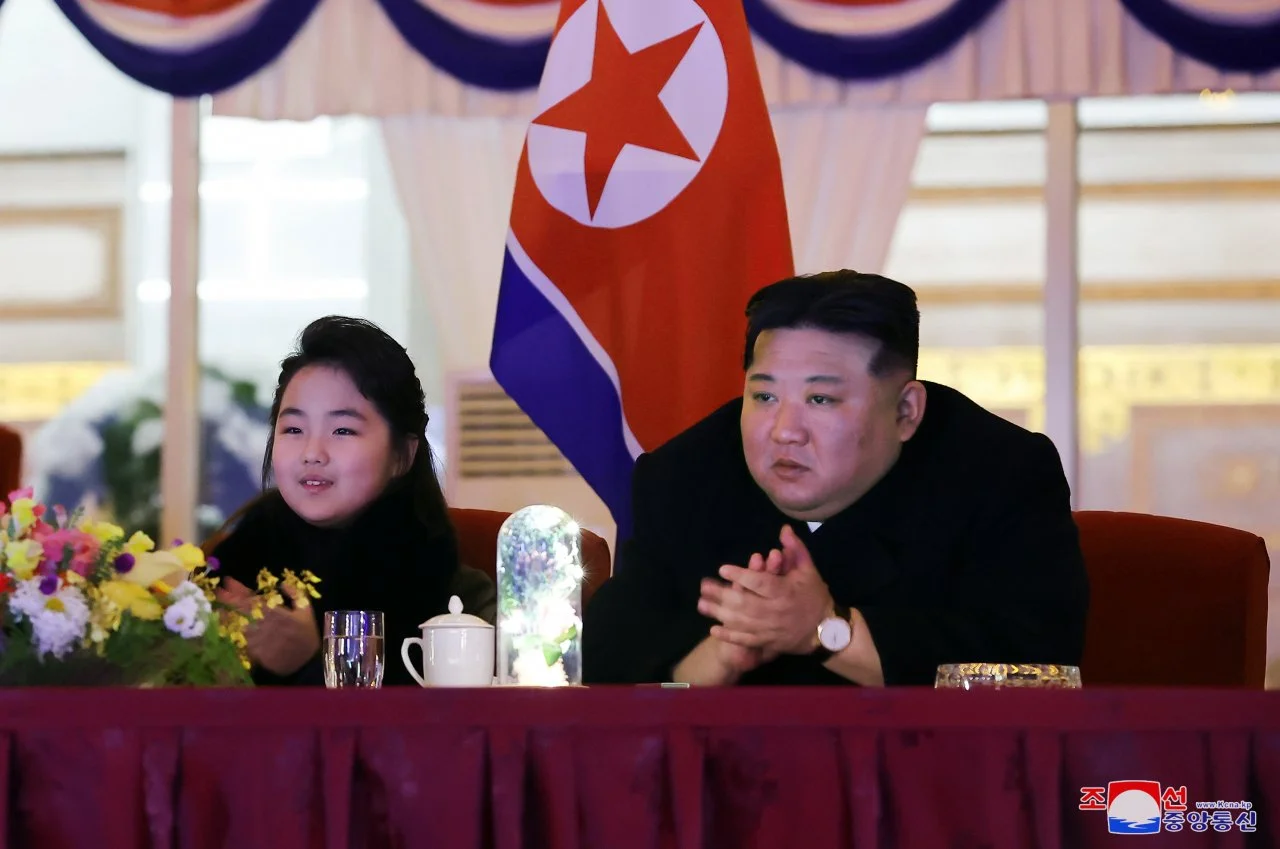
Kim Ju-ae

Top Headlines From North Korea - April 2026

Museum Opens for North Korean Troops Killed in Ukraine

  • North Korea has opened the "Memorial Museum of Combat Feats" to honor soldiers killed while fighting alongside Russian forces in Ukraine.

  • The museum’s opening marks the first anniversary of the "liberation" of Russia's Kursk region, emphasizing the deepening military partnership between Kim Jong Un and Vladimir Putin.

  • South Korean intelligence estimates that roughly 2,000 of the 15,000 North Korean troops deployed to the region have been killed in action.

Source: JoongAng Daily

North Korea’s Eroding "Universal Free Healthcare System"
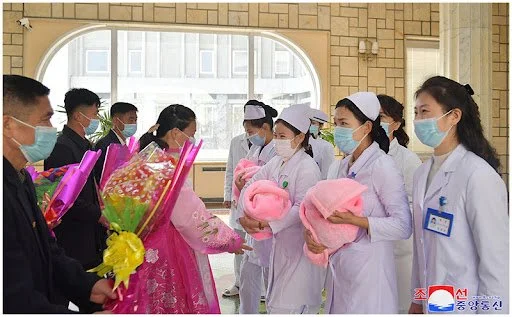
  • Humanitarian health programs for mothers and children remain one of the few viable, non-political channels for international engagement with the DPRK.

  • Internal reports suggest North Korea’s "Universal Free Healthcare System" has quietly eroded since the 2020 border closures, leading to critical shortages in basic medical supplies.

  • Maintaining these health initiatives is described as essential for preserving a rare international foothold and providing life-saving vaccinations and nutrition in an isolated environment.

Source: 38 North

The 34th April Spring Friendship Art Festival in Pyongyang
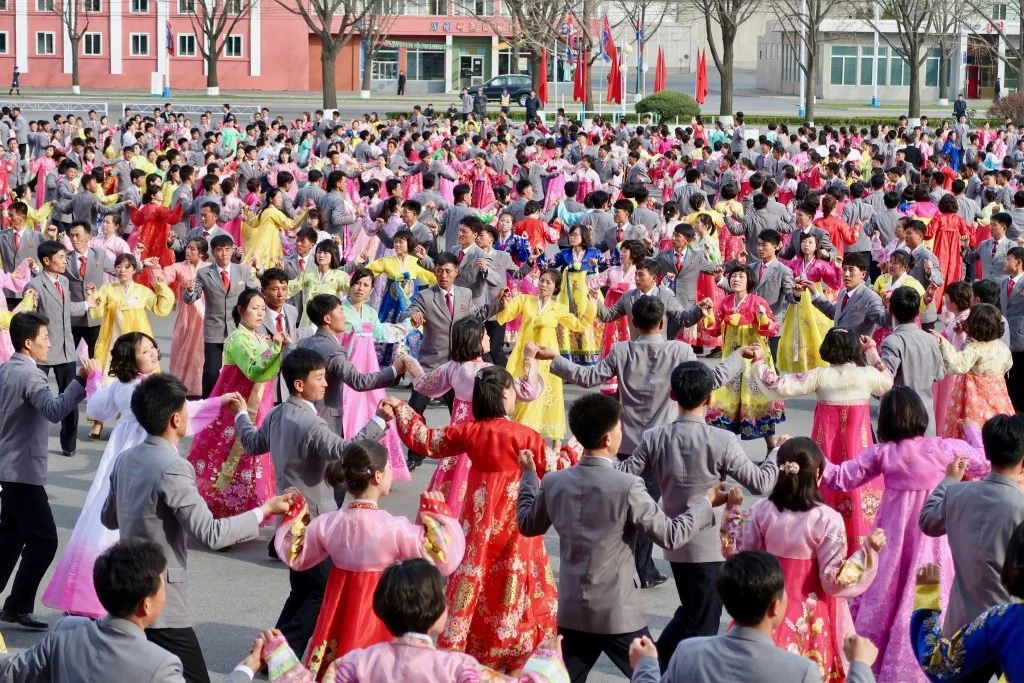
  • In mid-April 2026, Pyongyang hosted its largest cultural event in years, featuring 67 art, dance, and acrobatic troupes from 26 different countries.

  • The event coincided with a "National Foodstuff Exhibition" showcasing regional products and a "Flower Festival" at the Okryu Exhibition House.

  • Observers noted that state media has significantly reduced the use of the traditional "Day of the Sun" title for these festivities, potentially to further center the cult of personality on Kim Jong Un himself.

Source: Yonhap News

Credible Intelligence on Kim Jong Un’s Successor
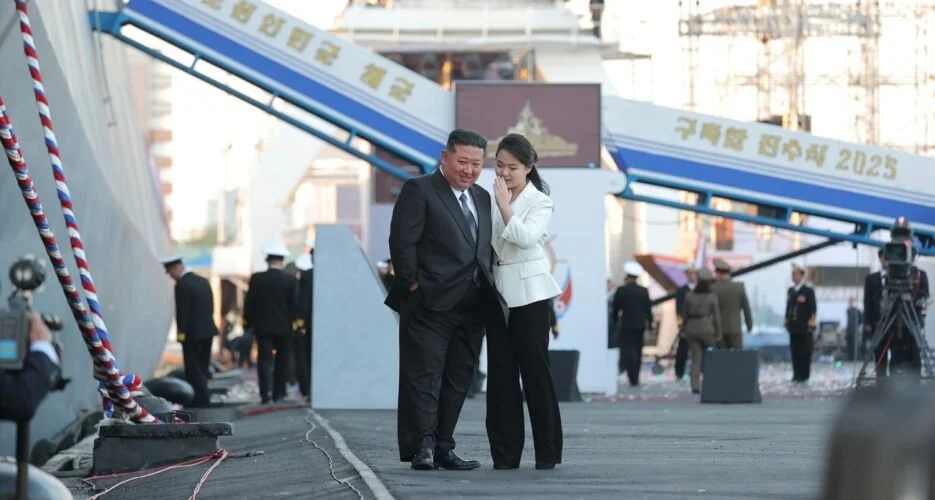
  • South Korean intelligence officials state there is "credible intelligence" that Kim Jong Un’s daughter, Kim Ju Ae, is being groomed as the official successor.

  • Her frequent appearances at major military and state events are viewed as a deliberate effort to normalize her status to the public and the North Korean elite.

  • Analysts suggest the regime is working to solidify a four-generation "Baekdu" bloodline transition, though her young age remains a factor for long-term stability.

Source: Fox News
Xi's Parade - Putin, Kim, and Kim's Daughter

North Korean Princess’ First Trip to China

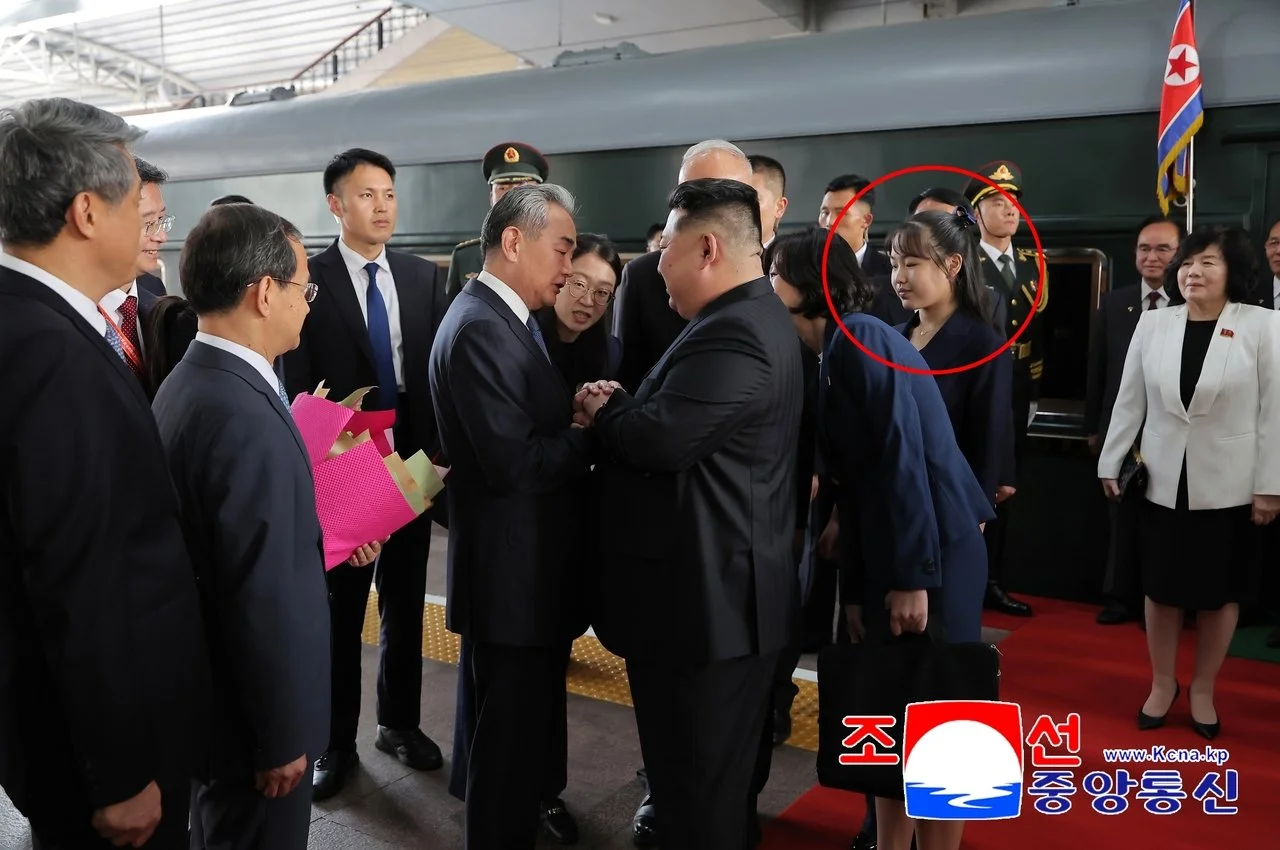
North Korea’s leader, Kim Jong-un, has reappeared on the world stage — this time in Beijing, attending China’s largest-ever military parade. The trip was his first to China since 2019, but what truly caught the world’s eye was his daughter, Kim Ju-ae, walking beside him. Her presence marks the first time the teenage heir-apparent has joined her father on an international visit, offering what many see as a preview of North Korea’s future leadership. The pair arrived aboard Kim’s signature armored train, greeted by senior Chinese officials. Ju-ae, believed to be around 12 or 13 years old, was placed prominently at her father’s side during official events, even standing ahead of senior North Korean figures like Foreign Minister, Choe Son-hui.

Outside China, the optics were splashed across headlines and dissected by analysts. Ju-ae’s inclusion appears to be a carefully choreographed signal that the Kim dynasty’s succession plan is already in motion. But inside China, state media chose a very different tone: the coverage was perfunctory, mentioning Kim only briefly and noting his daughter almost as an afterthought.

WHY CHINA PLAYED IT LOW-KEY

While global headlines buzzed with images of the young “front runner” to succession, Chinese media barely registered Ju-ae’s presence. Though there were reports about Kim arriving in China for the parade, there were very few that noted Ju-ae had accompanied him. The restraint appears calculated, prompting speculations that Beijing wanted the spotlight firmly on President Xi Jin-ping and China’s own military prowess, with drones, hypersonic missiles and robotic weapons rolling through Tiananmen Square in a spectacle designed to project strength and leadership. Overemphasizing Kim’s rare appearance, and particularly his daughter’s first international outing, could risk diluting that message. 

Meanwhile, Ju-ae is a living emblem of hereditary succession, a theme that resonates uncomfortably in China, where netizens already joke about “second-generation reds,” the children of the Chinese Communist Party’s elites who often occupy leadership roles today, like Xi-Jinping himself, the son of a veteran revolutionary and former State Council Secretary General. Broadcasting Ju-ae too prominently could invite comparisons Beijing would rather avoid, thus the limited coverage ensured North Korea remained framed as a distant, junior partner – defined more by its differences than its likeness – rather than a co-star.

SWIFT ERASURE OF KIM’S FOOTPRINTS

If Beijing’s muted coverage suggested careful stage-management, North Korea’s own actions revealed just how far Pyongyang goes to control the narrative and protect its dear leader. After Kim’s talks with Russia’s Vladimir Putin during the same visit in Beijing, aides moved swiftly to erase all physical traces of his presence. According to Reuters, North Korean staff wiped down his chair, cleared away the coffee table and removed his drinking glass — part of an extreme security protocol designed to deny foreign intelligence agencies even the smallest sample of his royal DNA. As with his previous trips abroad, Kim’s green train also carried its own private toilet to ensure no waste could be collected en route. Analyst Michael Madden of the Stimson Center noted that for Pyongyang, such measures are essential because any medical data could expose vulnerabilities. 

Moreover, these practices are long-standing: during Kim’s 2019 summit with Donald Trump in Hanoi, his team stripped mattresses and secured hotel floors; when meeting South Korea’s Moon Jae-in in 2018, they sanitized furniture before he sat; and before his 2023 summit with Putin, aides disinfected chairs and even scanned them with metal detectors. Together, these habits underscore both the paranoia and precision with which North Korea projects its leadership, ensuring that Kim is seen exactly as intended, and never more.

In the end, Kim’s decision to bring Ju-ae to Beijing was likely not just a family gesture but a calculated act of statecraft. China, for its part, embraced Kim’s presence just enough to highlight its alliances, while simultaneously restricting any coverage that might distract from its own carefully curated narrative of strength. The result was an episode that captured both the fragility and the endurance of authoritarian rule: power projected outward with military parades and dynastic heirs, but guarded inward with silence, censorship and the obsessive erasure of traces.