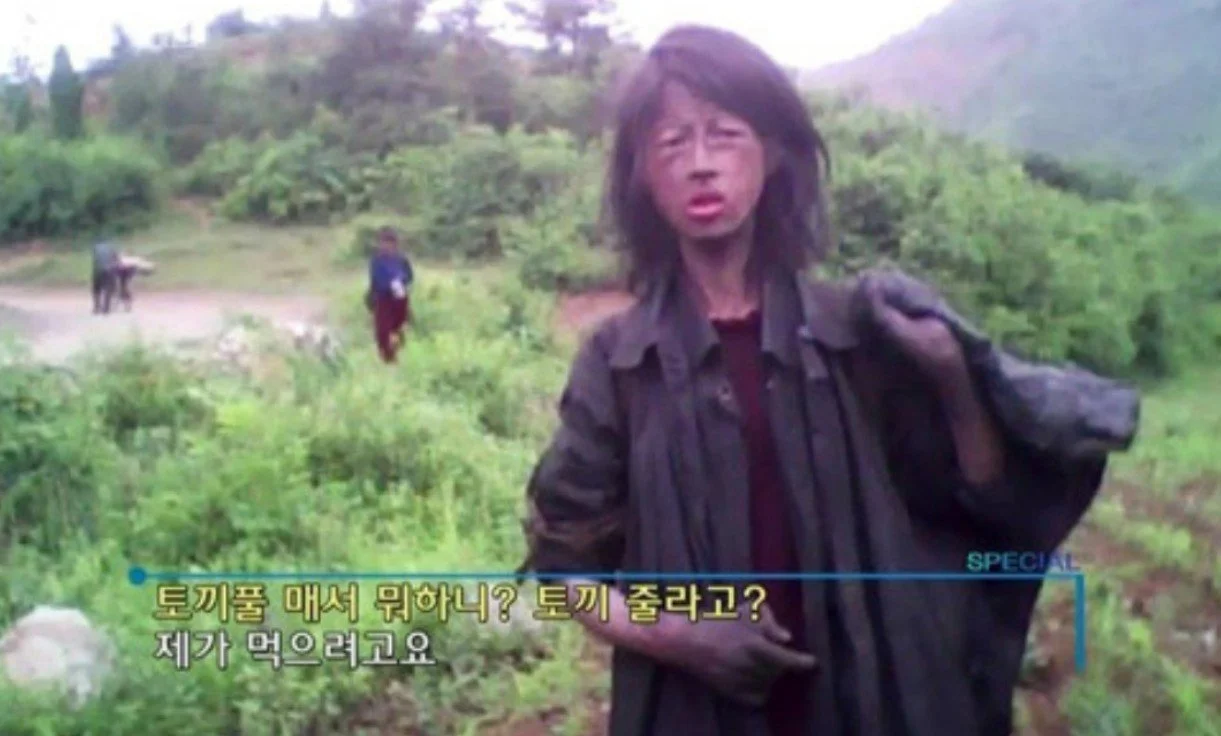
In 2010, undercover North Korean journalist Kim Dong-cheul captured heartbreaking footage of a malnourished 23-year-old woman scavenging for wild grass in South Pyongan province. A recently resurfaced Instagram post has thrust this haunting image back into the public eye. Tragically, this is not just a relic of 2010; in the present age, this level of extreme poverty and starvation remains very much a reality in North Korea. According to the 2026 Human Rights Watch World Report and recent food security assessments, severe malnutrition and starvation deaths continue to plague the provinces as the government prioritizes weapons development over its citizens. The only difference today is that unprecedented digital surveillance and extreme border closures implemented since 2020 have made it nearly impossible to smuggle out similar video evidence.
Driven by deep love and a commitment to family survival, North Korean refugees living in South Korea face extraordinary risks to send financial support back home. A South Korean court recently overturned the conviction of a 54-year-old refugee charged under the Foreign Exchange Transactions Act. The defector’s “crime” was helping fellow escapees send money to their starving families back in the North, as the funds did not go through officially recognized banking channels. Sadly, these underground remittances are not a luxury, but often the only hope for North Koreans to access food, medicine and basic survival in a shattered economy. However, since there are no formal, legal banking channels to transfer funds into North Korea, defectors are forced to rely on illegal measures to keep their families alive.
A Lifeline Across the Border: The Cost of Underground Remittances
According to a 2023 survey by the Database Center for North Korean Human Rights, 63.5 percent of North Korean defectors had transferred money to families or friends back home at least once since arriving in South Korea. Sending money across the world’s most heavily guarded border requires a sophisticated underground network. At least four brokers and delivery personnel are involved in the process. Defectors must wire funds through broker accounts operating in South Korea and China, which then coordinate with shadow contacts inside North Korea to physically deliver the cash.
High Risks and Substantial Fees
This system comes at a steep price. As the consequences for being caught are severe – including being sent to the country’s political prison camps where hundreds of thousands are believed to have died over the years – brokers typically claim exorbitant fees, with commissions averaging 48.1 percent of the transferred amount. To guarantee the transaction was successful, brokers provide “proof of delivery” by sending a smuggled photograph of the family member holding the cash or using smuggled Chinese smartphones to arrange a brief phone call confirming receipt. Nevertheless, there remain loopholes in this process built entirely on a trust system, as a defector identified as Ms. Jung described hearing about “some instances where brokers snatched the cash after recording the families holding the cash or demanded money.”
Caught In South Korea’s Legal Web
Building a new life in a hyper-competitive South Korean society is already immensely difficult for defectors. To make matters worse, their remittance networks have been caught in the crossfire of South Korean law enforcement. Over the past few years, former President Yoon Suk-yeol’s administration has aggressively cracked down on domestic money launderers and voice-phishing scammers who abuse the national banking system. In doing so, defector brokers have inadvertently been swept up in the dragnet. While past administrations largely turned a blind eye to these humanitarian transfers, defectors still lack explicit legal protections when sending money to starving relatives in North Korea. A shift in government could instantly expose these networks to criminal prosecution.
Trauma, Resilience, and the Path to True Healing
These legal battles are just one visible layer of a much deeper psychological struggle. As explored in Dan Chung’s recent book, A Hard Freedom: The Dreams and Trauma of North Korean Refugees, the trauma of defection does not vanish once defectors cross the border into safety. They carry this invisible weight of survivor’s guilt, political isolation and the agonizing, ongoing fight to sustain the families they had to leave behind. The recently overturned convictions offer a glimmer of temporary legal relief, but they stand as a stark reminder that true freedom remains elusive for defectors as long as their loved ones are held captive.