
Christianity in North Korea

Kim Il-sung’s Christian Father

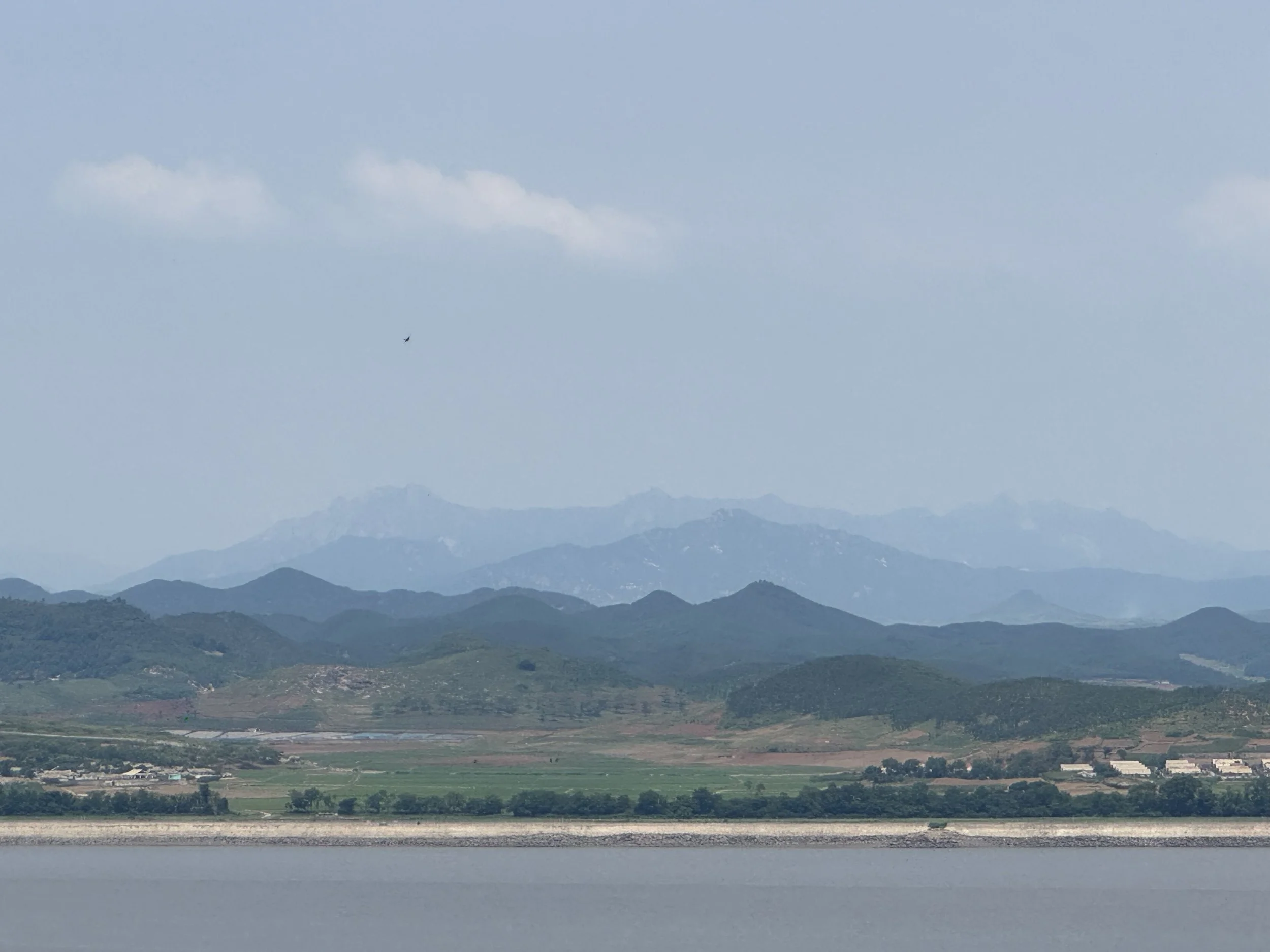
North Korea seen from South Korea, 2026

In North Korea, the Kim family is treated with religious devotion. Portraits of the leaders hang in every home, mandatory bowing before their statues mimics church rituals, and children are taught from birth that the ruling family is the supreme provider for the nation. The regime demands absolute loyalty and harshly punishes any competing belief system, especially Christianity.

Yet, hidden beneath the state's official history lies a surprising truth: the father of North Korea’s founding patriarch, Kim Il-sung, was a devout Christian. Kim Hyong-jik was not just a passive churchgoer. Born in 1894, he grew up during a time when Pyongyang was known as the “Jerusalem of the East” (read more on Once Upon A Time, North Korea was the Christian Hub of the East) due to a thriving Christian movement. He attended a school founded by American missionaries, married the daughter of a prominent Presbyterian minister, and even served as a part-time Protestant missionary himself.

The Christian Roots of Kim Hyong-jik

During this era, the Christian church in Korea was more than a religious institution. Protestant missionaries from the United States brought theology, modern medicine, and education. Kim's life was deeply intertwined with this movement. His marriage to Kang Pan-sok strengthened these ties, as she was the daughter of a respected Presbyterian minister who founded the Changdok School in Pyongyang.
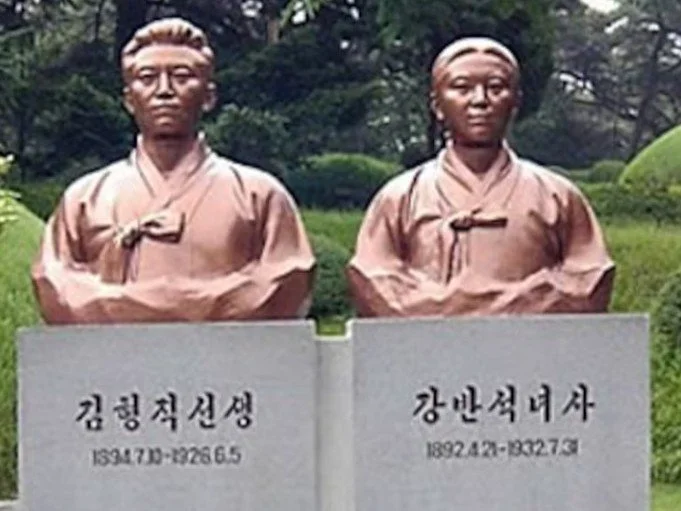
Under oppressive Japanese colonial rule, the church served as a vital network for the Korean independence movement. Kim Hyong-jik was an active member of these underground nationalist circles until his early death in 1926 at age 31.

Though the regime keeps these details quiet, Kim Hyong-jik's faith left a clear mark on his family. In his autobiography, With the Century, Kim Il-sung wrote about his mother’s deep Christian faith, recalled accompanying her to church services, and remembered his fondness for the church’s organ music. Read more on Christianity in North Korea.

Replacing the Messiah

If Kim Il-sung grew up immersed in the community and devotion of the Presbyterian church, why did he turn away? Historians suggest that his father’s early death may have led to deep disillusionment. The young Kim watched his parents' generation fail to liberate Korea from brutal Japanese rule. To him, the peaceful protests, prayers and gradualist approaches of the Christian and nationalist elders had proven entirely useless against Japanese guns, urging him to turn to communism, which perhaps he believed offered a pragmatic, militant solution to defeat imperialism that his parents’ faith could not provide.

Even though Kim Il-sung abandoned his faith for Marxism-Leninism, his early exposure to the church deeply shaped the structure of the North Korean state.  In Jonathan Cheng’s book, Korean Messiah, he argued that Kim Il-sung understood intuitively what faith could achieve: it builds community, inspires devotion, and demands absolute loyalty. When he came to power after World War II, he didn't just suppress the church—he replaced it. The supreme leader took the place of Christ as the figure of salvation. The Kim family’s writings replaced the Bible as ultimate truth. Even the concept of original sin was mirrored in the Songbun system, which stains a family's social standing for generations based on perceived political disloyalty.

To secure this system, the regime erased Kim Hyong-jik's Christian history entirely. Today, statues honor him not as a man of God, but as a pioneer of the communist movement. Yet this history serves as a powerful reminder: before the current regime took root, a deep legacy of faith and community already belonged to the Korean people.

Enduring Hope

This hidden history reveals that political ideology cannot permanently replace the profound human need for spiritual guidance and lasting hope. When we encounter North Koreans today whose lives have been fractured by this system, we are reminded of the vital importance of offering a safe community where true emotional and physical healing can begin. While the regime sought to erase a legacy of faith, the love of Christ continues to reach those in need, offering an abundant life and peace that no earthly leader or system can provide.

A "Fake" Revival with Real Impact: The True Story Behind the Movie Choir of God

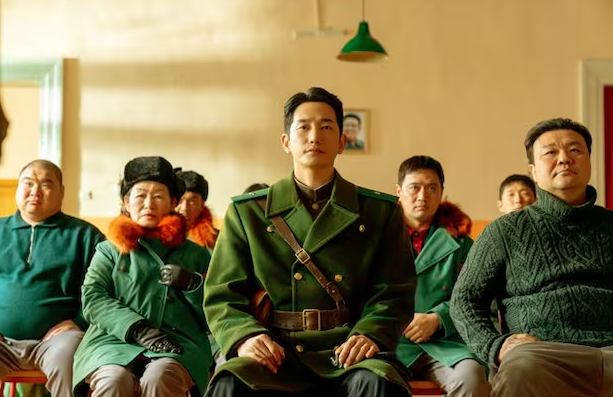
Recently, our staff took our Elim House residents to see the newly released South Korean film Choir of God. What began as a simple community outing quickly became something far more meaningful. Many of our residents left the theater visibly moved, and the conversations that followed – about faith, worship and the reality of believers in North Korea – made lasting impressions on the group, who immediately recognized their own journeys reflected in the film’s themes.

Based on a true story, Choir of God has emerged as a surprise hit in South Korea, drawing attention not only for its artistic originality but for its bold portrayal of Christianity under repression in North Korea. For our community, the film resonated deeply during our subsequent worship service, where Kelly, inspired by the film, offered a special praise that captured the spirit of gratitude and solidarity it stirred in all of us (read more on Kelly’s story).

WHAT THE FILM SAYS ABOUT FAITH IN NORTH KOREA

The premise of Choir of God feels stranger than fiction. The film follows a state-approved choir in North Korea, created by the regime to showcase religious tolerance and win international acceptance while under ongoing sanctions. As the singers developed genuine faith, authorities ordered their execution, but the surveillance officers risked everything to help them escape to China, transforming a propaganda scheme into a story of courage and conscience. Notably, the choir performed internationally recognized Christian worship songs such as “Way Maker” and “Grace,” carefully staged to project harmony and openness, while genuine Christian faith remains brutally suppressed behind the scenes. 

What makes the film especially compelling is its unexpected tone. Rather than presenting a grim narrative, Choir of God weaves in moments of dry humor and human warmth. The irony of joyful worship music performed under coercion becomes a powerful metaphor for faith constrained but not extinguished.

However, while Choir of God effectively portrays the severe repression faced by Christians in North Korea, some defectors say the film takes dramatic liberties. One scene depicts a security officer whose mother was executed for underground church activity – an outcome that former diplomat, Kim Chol-sing, noted as “fictional and unrealistic” since such a child “would be sent to an orphanage immediately” and barred from state service. Jang Guk-cheol, a defector, added that even descendants of politically controversial families were prohibited from joining the ruling Workers’ Party. Other scenes portraying security officials as unfamiliar with South Korean music were also questioned. Kim Chol-sing pointed out that “The state security ministry is not stupid,” while another defector, Jang Se-yul, commented that monitoring foreign media is central to their job.

Despite these criticisms, many defectors agree the film accurately reflects the reality that genuine Christian faith survives only underground. Choir of God draws inspiration from a “fake revival” held at Pyongyang’s state-approved Chilgol Church in 1994, which the movie’s director, Kim Hyung-hyup, said was staged during the regime’s outreach to American evangelist, Billy Graham. By way of background, Chilgol Church is a real institution that is said to sustain the illusion of religious freedom. As Jang Se-yul described, “My aunt used to go to the church to promote the idea to foreigners that we now have freedom of religion … In reality, she was just a fake congregant.” These accounts align with broader findings. The U.S. State Department has confirmed the DPRK’s denial of religious freedom as “absolute,” and a 2025 Database Center for North Korean Human Rights report found that nearly all defectors say free religious activity is impossible, with many reporting punishments by political prison camps.

But the struggle for religious freedom isn't confined to the silver screen or the North Korean border. Today, our brothers and sisters in China are facing a parallel storm.

CHRISTIANS IN CHINA LIVING IN FEAR

While Choir of God is set in North Korea, its message feels painfully current when viewed alongside developments in China. The film’s exploration of how faith survives under authoritarian pressure mirrors what Christians in China, including our staff and defectors under our care, are experiencing right now.

Gao Ying-jia, a senior pastor in one of China’s largest underground house church networks, was arrested after plain-clothed police knocked on his door at 2 a.m. while he and his wife were hiding with friends in a Beijing suburb. Their young son slept upstairs as they went down quietly, knowing, as his wife later said, “our time was up.” Two months later, Gao remained in detention, charged with “illegal use of information networks,” part of what human rights groups describe as the most sweeping crackdown on Christians since 2018. “We both knew that as Christians in China, there were risks,” his wife, Geng Peng-peng, said after fleeing overseas with their child, “But to be honest, you can never be fully prepared.” Since Gao’s and dozens of other pastors’ arrests, raids expanded nationwide. In one eastern city alone, more than 100 Christians were reportedly detained in a single week. Now Geng faces impossible choices about where to live and how to protect her family, “Sometimes I wonder, is this real?” 

Over the past year, Chinese authorities have intensified efforts to dismantle underground and house churches. Pastors and church members have been arrested or detained, private homes used for worship sealed and congregations forced to disband as part of a nationwide campaign to assert state control over religion. With increased surveillance, mandatory registration requirements and coordinated police raids, many believers are driven to abandon communal worship altogether as China’s regulations on religion increasingly frame independent Christian gatherings as threats to national security.

Seen through this lens, Choir of God is more than a cinematic surprise hit. For our defector community at Elim House, it was a rare moment of being 'seen.' For the rest of us, it is a sobering invitation to remember—and pray for—those who still find the courage to worship in the shadows.