
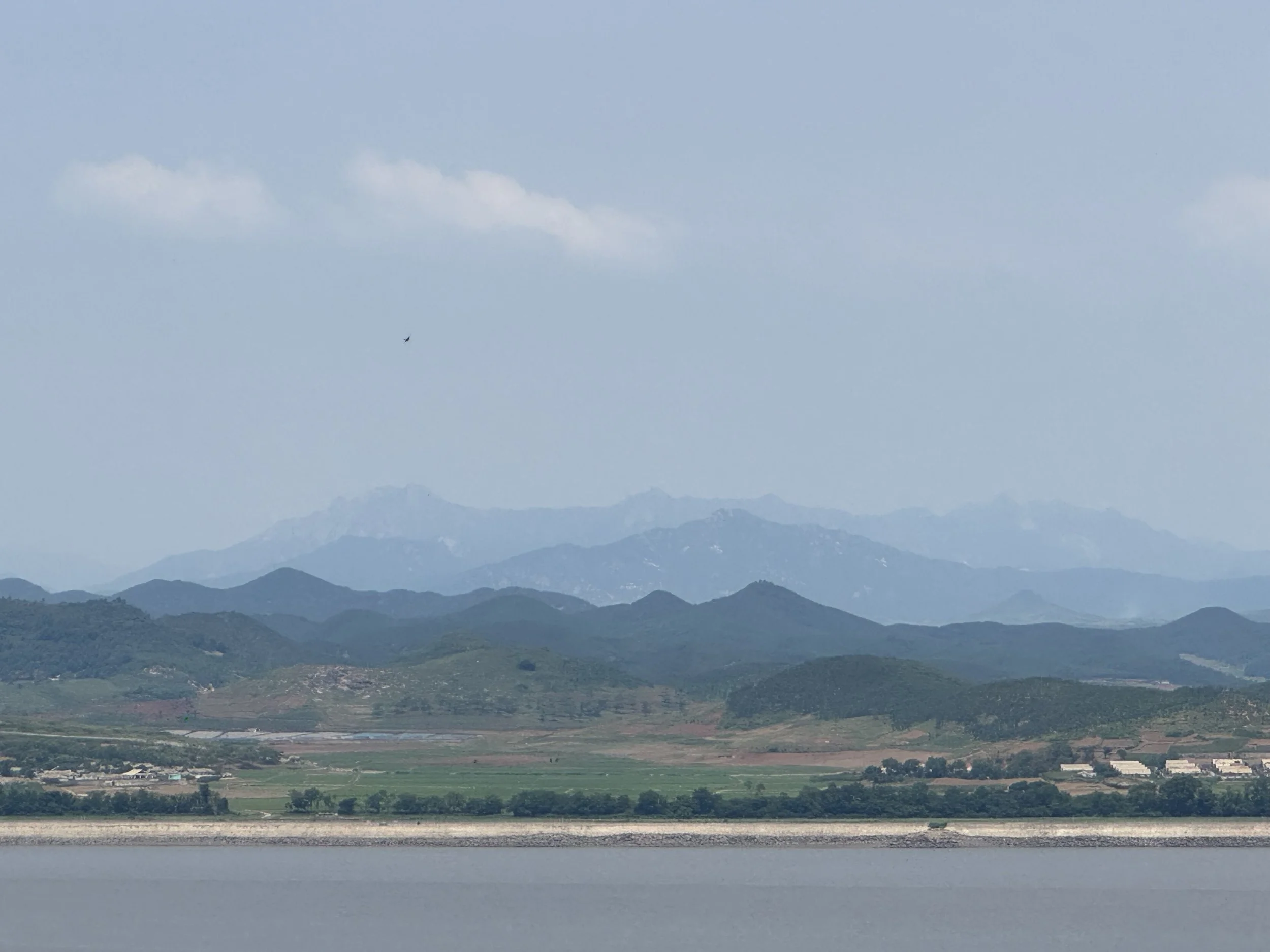
North Korea seen from South Korea, 2026
In North Korea, the Kim family is treated with religious devotion. Portraits of the leaders hang in every home, mandatory bowing before their statues mimics church rituals, and children are taught from birth that the ruling family is the supreme provider for the nation. The regime demands absolute loyalty and harshly punishes any competing belief system, especially Christianity.
Yet, hidden beneath the state's official history lies a surprising truth: the father of North Korea’s founding patriarch, Kim Il-sung, was a devout Christian. Kim Hyong-jik was not just a passive churchgoer. Born in 1894, he grew up during a time when Pyongyang was known as the “Jerusalem of the East” (read more on Once Upon A Time, North Korea was the Christian Hub of the East) due to a thriving Christian movement. He attended a school founded by American missionaries, married the daughter of a prominent Presbyterian minister, and even served as a part-time Protestant missionary himself.
The Christian Roots of Kim Hyong-jik
During this era, the Christian church in Korea was more than a religious institution. Protestant missionaries from the United States brought theology, modern medicine, and education. Kim's life was deeply intertwined with this movement. His marriage to Kang Pan-sok strengthened these ties, as she was the daughter of a respected Presbyterian minister who founded the Changdok School in Pyongyang.
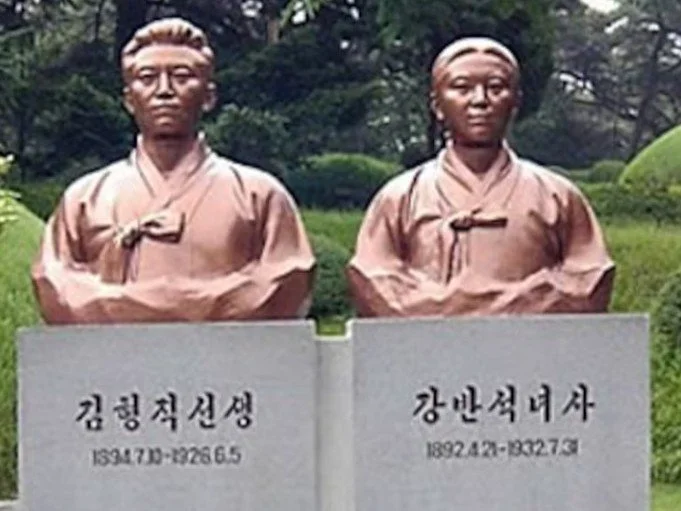
Under oppressive Japanese colonial rule, the church served as a vital network for the Korean independence movement. Kim Hyong-jik was an active member of these underground nationalist circles until his early death in 1926 at age 31.
Though the regime keeps these details quiet, Kim Hyong-jik's faith left a clear mark on his family. In his autobiography, With the Century, Kim Il-sung wrote about his mother’s deep Christian faith, recalled accompanying her to church services, and remembered his fondness for the church’s organ music. Read more on Christianity in North Korea.
Replacing the Messiah
If Kim Il-sung grew up immersed in the community and devotion of the Presbyterian church, why did he turn away? Historians suggest that his father’s early death may have led to deep disillusionment. The young Kim watched his parents' generation fail to liberate Korea from brutal Japanese rule. To him, the peaceful protests, prayers and gradualist approaches of the Christian and nationalist elders had proven entirely useless against Japanese guns, urging him to turn to communism, which perhaps he believed offered a pragmatic, militant solution to defeat imperialism that his parents’ faith could not provide.
Even though Kim Il-sung abandoned his faith for Marxism-Leninism, his early exposure to the church deeply shaped the structure of the North Korean state. In Jonathan Cheng’s book, Korean Messiah, he argued that Kim Il-sung understood intuitively what faith could achieve: it builds community, inspires devotion, and demands absolute loyalty. When he came to power after World War II, he didn't just suppress the church—he replaced it. The supreme leader took the place of Christ as the figure of salvation. The Kim family’s writings replaced the Bible as ultimate truth. Even the concept of original sin was mirrored in the Songbun system, which stains a family's social standing for generations based on perceived political disloyalty.
To secure this system, the regime erased Kim Hyong-jik's Christian history entirely. Today, statues honor him not as a man of God, but as a pioneer of the communist movement. Yet this history serves as a powerful reminder: before the current regime took root, a deep legacy of faith and community already belonged to the Korean people.
Enduring Hope
This hidden history reveals that political ideology cannot permanently replace the profound human need for spiritual guidance and lasting hope. When we encounter North Koreans today whose lives have been fractured by this system, we are reminded of the vital importance of offering a safe community where true emotional and physical healing can begin. While the regime sought to erase a legacy of faith, the love of Christ continues to reach those in need, offering an abundant life and peace that no earthly leader or system can provide.