Lunar New Year

Year of the Horse 2026: From Malfoy Memes to Refugee Realities

The Face of Lunar New Year 2026 - Draco Malfoy

FORTUNE COMES WITH THE HORSE

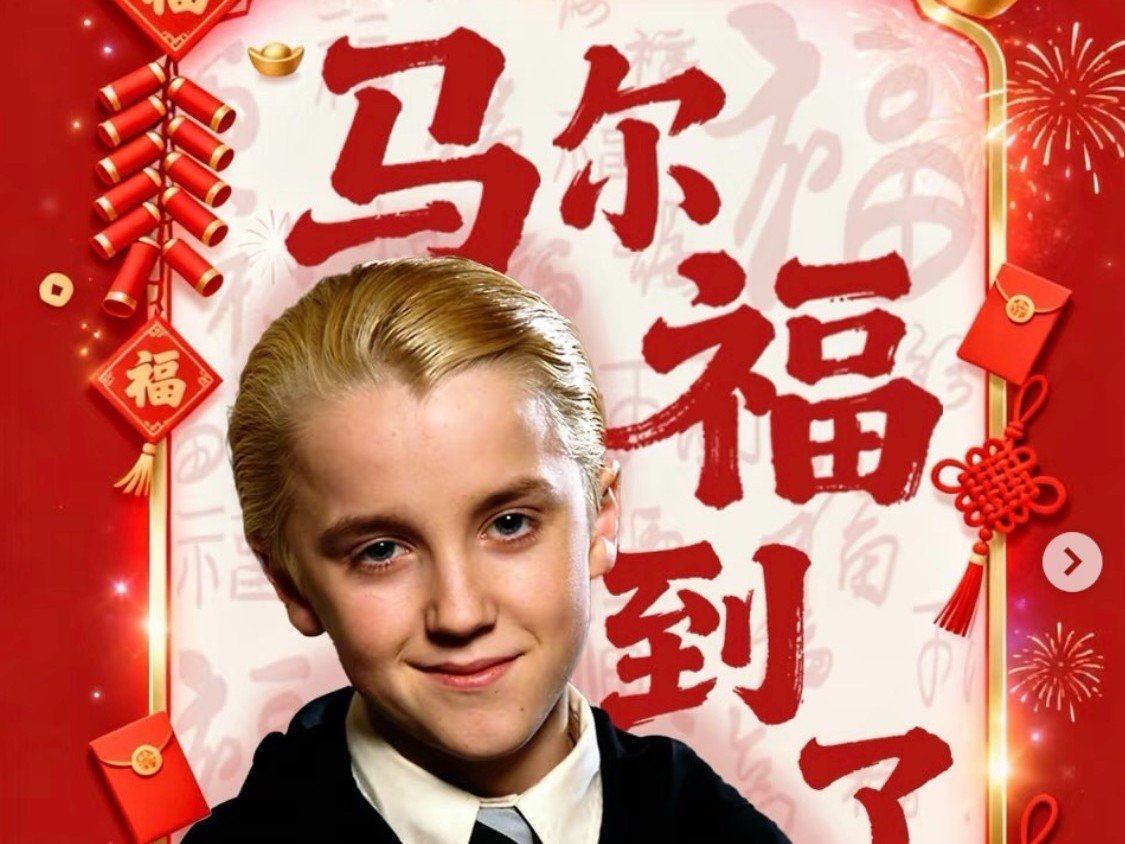
If you walk through a Chinese shopping district this February, the traditional Lunar New Year decorations look a bit different. Amidst the red lanterns and gold-trimmed zodiac symbols for the Year of the Horse, a surprising face has started appearing on shopfronts and smartphone wallpapers: the icy, platinum-blond sneer of Draco Malfoy.

The Harry Potter antagonist’s sudden rise to "lucky charm" status isn't about a sudden love for Slytherin. Instead, it’s the result of a linguistic coincidence that the internet has turned into a viral phenomenon.

In Mandarin, Malfoy’s name is transliterated as 馬爾福 (“ma er fu”). 

  • The first character 馬 (“ma”) literally means “horse” 

  • The final character 福 (“fu”) means “fortune” or “blessing” 

Together, this sounds similar to auspicious phrases like 馬來福 (“ma lai fu”), which means “fortune comes with the horse,” creating an accidental but deeply appealing association between Malfoy and prosperity. 

REBRANDING AND REDEMPTION

Images and videos of red Draco-themed decorations are flooding platforms like Douyin and Xiaohongshu (China’s version of TikTok and Instagram respectively). Searches such as “Malfoy Chinese New Year Wallpaper” are among the most popular, and typical designs combine Draco’s characteristic smirk with traditional good luck motifs. Many of these wallpapers carry playful captions like “pure blood blessings” and “pure blood’s wealth,” while festive Lunar New Year couplets riff on Hogwarts lore, promising to “add ten digits to your bank account” as if “adding ten points to Slytherin,” or even joking in aristocratic Malfoy fashion, “I will tell my father to give you red packets.”

The jokes about 'pure blood blessings' carry a sharp, unintended sting. In the Harry Potter universe, 'Pure Blood' is the ultimate status of the insider, a reference to the ones who belong. In contemporary China, status is everything. While Malfoy’s fictional pedigree is celebrated on red envelopes, North Korean defectors are branded with the status of 'illegal economic migrants,' a label that strips them of their rights and makes them targets for repatriation. A fictional villain is welcomed for his name while real refugees are hunted for their lack of papers.

SOMBER REALITY FOR NORTH KOREAN DEFECTORS IN CHINA

While Draco Malfoy’s unlikely ascent to mascot status offers a light-hearted cross-cultural laugh during the festival, the situation for North Korean defectors in China remains grim and deeply bitter. The absence of legal status and formal refugee recognition means that, even as families gather for Lunar New Year dinners and fireworks, many defectors spend the holiday in hiding. Cut off from their families and unable to travel, they avoid crowded streets amid heightened holiday surveillance in public spaces, confining themselves to cramped apartments to avoid police checks. With factories and many local businesses shuttered for the weeklong break, work disappears as well, leaving them isolated, invisible and fearful of arrest during a season defined by reunion and celebration.

Meanwhile, Christians who provide shelter, food or safe passage to North Korean defectors are closely monitored by the Chinese government, as authorities frame independent religious activity as a potential foreign threat. During major national holidays such as Lunar New Year, when China experiences the world’s largest annual human migration (with an estimated record-breaking 9.5 billion passenger trips expected over the 40-day Spring Festival travel rush this year), authorities increase security measures in transport hubs, neighborhoods and places of gathering. For defector communities, the result is a holiday that amplifies isolation as churches and faith groups that might otherwise organize shared meals or offer companionship limit gatherings to avoid attracting attention.

In 2026, Draco Malfoy, a cruel and prideful character created by J.K. Rowling, is warmly reimagined as a bringer of fortune, with his image adorning homes and malls across China. Yet real people escaping hardship lack even the basic dignity of refuge, while those motivated by faith to offer love and care to others are treated with suspicion and perceived as greater threats compared to a once-reviled villain. In a festival that celebrates renewal and good fortune, the irony is simply too difficult to ignore.
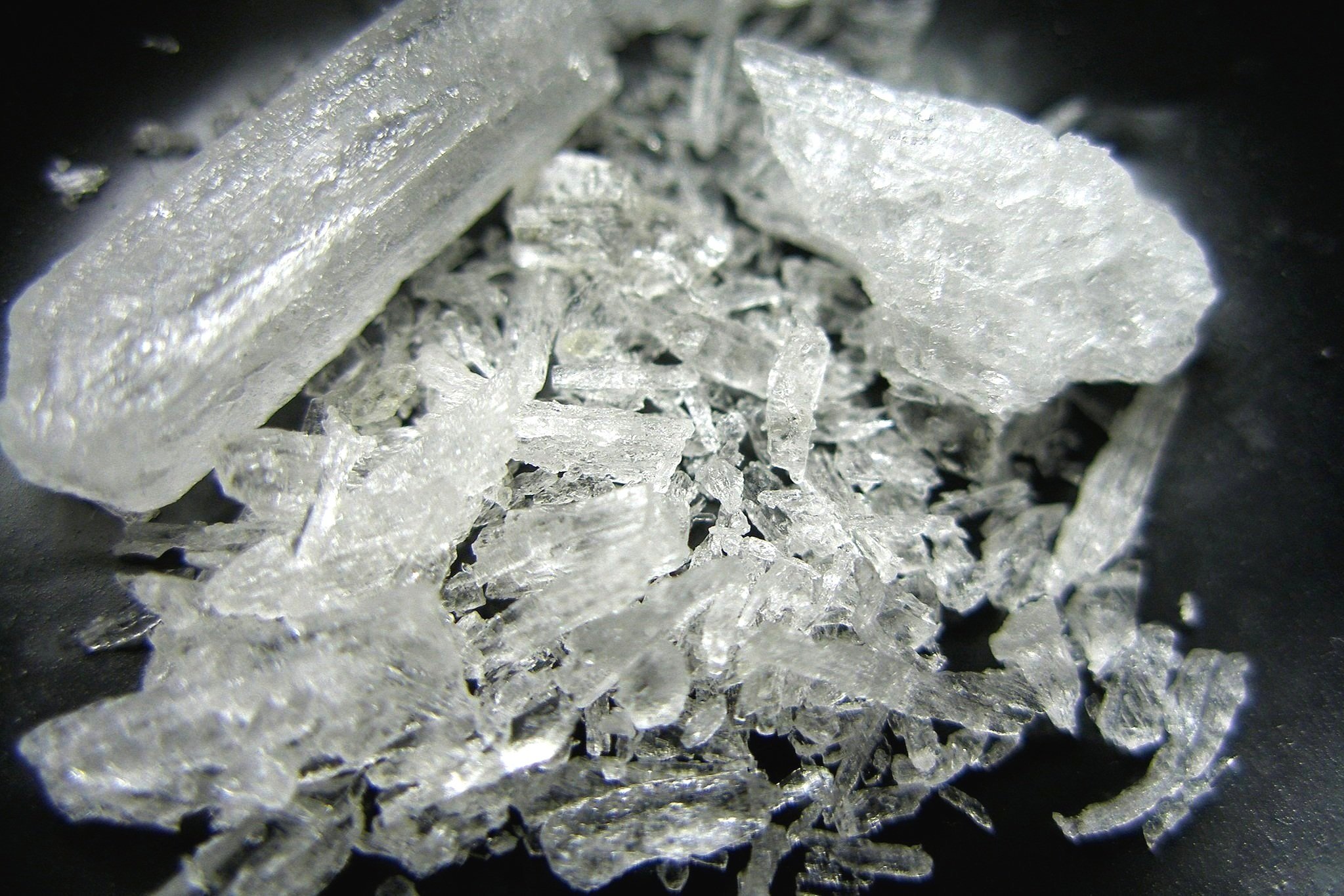
North Koreans Buy Crystal Meth as Gifts for Lunar New Year

Lunar New Year festivities signify an important time of the year to spend quality time with family, indulge in delicious meals, and give out cash-filled red envelopes and gifts to loved ones.  In North Korea, where drug addiction is becoming increasingly prevalent in recent years, especially among North Korean youths, citizens have reportedly been exchanging crystal meth as presents to celebrate the holidays. It is known locally as “pingdu” which is the Korean version of the Chinese word for “ice drug” and is a popular gift for celebrating birthdays to graduations and special holidays like Lunar New Year. A source told Radio Free Asia that North Koreans use meth as a form of stress relief because “[they] want to forget their harsh reality and enjoy themselves”.  

Due to its accessibility and frequent use as an appetite suppressant, many North Koreans use crystal meth as casually as cigarettes. “A few factors could be driving such a trend.  First, crystal meth is produced inside North Korea, so stoppages of trade at the Chinese border due to sanctions have no effect on the availability of crystal meth within North Korea.  Meanwhile, imported food and consumer goods are often hard to come by due to sanctions enforcement, so it’s possible that more people are relying on domestically produced goods, including crystal meth, for gifts,” commented Justin Hastings, an associate professor from the University of Sydney.

INSIDE NORTH KOREA’S CRYSTAL METH TRADE

Historically, the production and use of meth were intended by the North Korean government to help improve its soldiers’ performance. This method was not unique to North Korea, as the Japanese had also utilized this method during WWII. Since the 1970s, many North Korean diplomats have been arrested abroad for drug smuggling. In the early 1990s, North Korea suffered from extensive farm crop failures, particularly in their harvest for poppies, which led to a collapse in profits from opium and heroin production. As a result, the government began producing and trafficking crystal meth for export using state-owned companies, diplomatic facilities and personnel, military vessels, and other state assets in exchange for foreign currency.  It is reported that the government had also formed connections with organized criminal networks outside of North Korea, including Chinese triads across the northern border of China and the Japanese yakuza, in order to facilitate distribution and pocket the proceeds from drug trafficking.  

Kim Kuk-song had worked for North Korea’s spy agencies for 30 years before he defected to South Korea in 2014. Kim told the BBC that he was ordered to set up a production line for crystal meth in order to raise funds for the regime during the famine from 1994 to 1998 under the former leader Kim Jong-il's regime. He described that “[at] that time, the Operational Department ran out of revolutionary funds for the Supreme Leader.  After being assigned to the task, I brought three foreigners from abroad into North Korea, built a production base in the training centre of the 715 liaison office of the Workers’ Party, and produced drugs” to fund the leader’s lavish lifestyle.

At a time when hundreds of thousands of people died from starvation during the famine in the 1990s, North Korean citizens had to resort to their own ways to survive without receiving any help from the government, namely to use meth they had produced to combat hunger. Consequently, domestically-produced crystal meth soon appeared across the country in non-government-regulated production centres, including factories and labs run by individuals. Today, meth acts as a widely practiced solution to tackle the chronic lack of healthcare in North Korea and is sold even in rural and remote areas as “people like [meth] better than opium because [meth] costs less and it is stronger,” said an anonymous source from South Hamgyong province.

CRYSTAL METH PLAYS AN ESSENTIAL ROLE IN NORTH KOREAN SOCIETY

Even though the government began clamping down on drug users (even going as far as interrogating elementary school students), to address the alarming spread of drug use in North Korea since the beginning of 2005, crystal meth trafficking to China has remained unaffected. It is no question that under the law, the production and trafficking of illicit drugs is illegal and drug dealers are occasionally punished, and executed in some cases, particularly during public crackdowns. However, the production of crystal meth remains an important source of income for the North Korean government and society as a whole. Hastings explained that “North Koreans throughout society have gone into business for themselves, through private enterprises, through officially sanctioned businesses – or, if they are state officials, by using their positions to license businesses and extract bribes, or to engage in side businesses of their own”. The government is thus able to indirectly profit from the drug trade using an off-the-books taxation system in order to benefit the elites and fund its nuclear program.

Crystal meth “has been largely seen inside North Korea as a kind of very powerful energy drug – similar to Red Bull, amplified,” commented Andrei Lankov, an expert of North Korea from Kookmin University.  Reports from 2016 also show that construction managers in Pyongyang had been supplying workers with meth in hopes of completing showcase projects faster.  In the social context, Lee Saera from Hoeryong even remarked how “[if] you go to somebody’s house it is a polite way to greet somebody by offering them a sniff.”  Since the pandemic, the number of drug traffickers have skyrocketed as “[residents] have always believed [meth] to be a cure-all drug...people are saying that it can prevent or even cure coronavirus,” a resident of North Hamgyong province told Radio Free Asia.  The source also said that “[people] believe it is true, because fevers, coughs and body aches will all temporarily disappear if a user inhales [meth]”.

While publicly denying the existence of any illegal drug activity within its border, according to Greg Scarlatoiu, executive director of the Committee for Human Rights in North Korea, Kim Jong-un and his regime may be enabling its people’s addiction. If meth works to “dull[s] the wills and minds of the North Korean people, the government tacitly allows it to go on,” says Greg.