

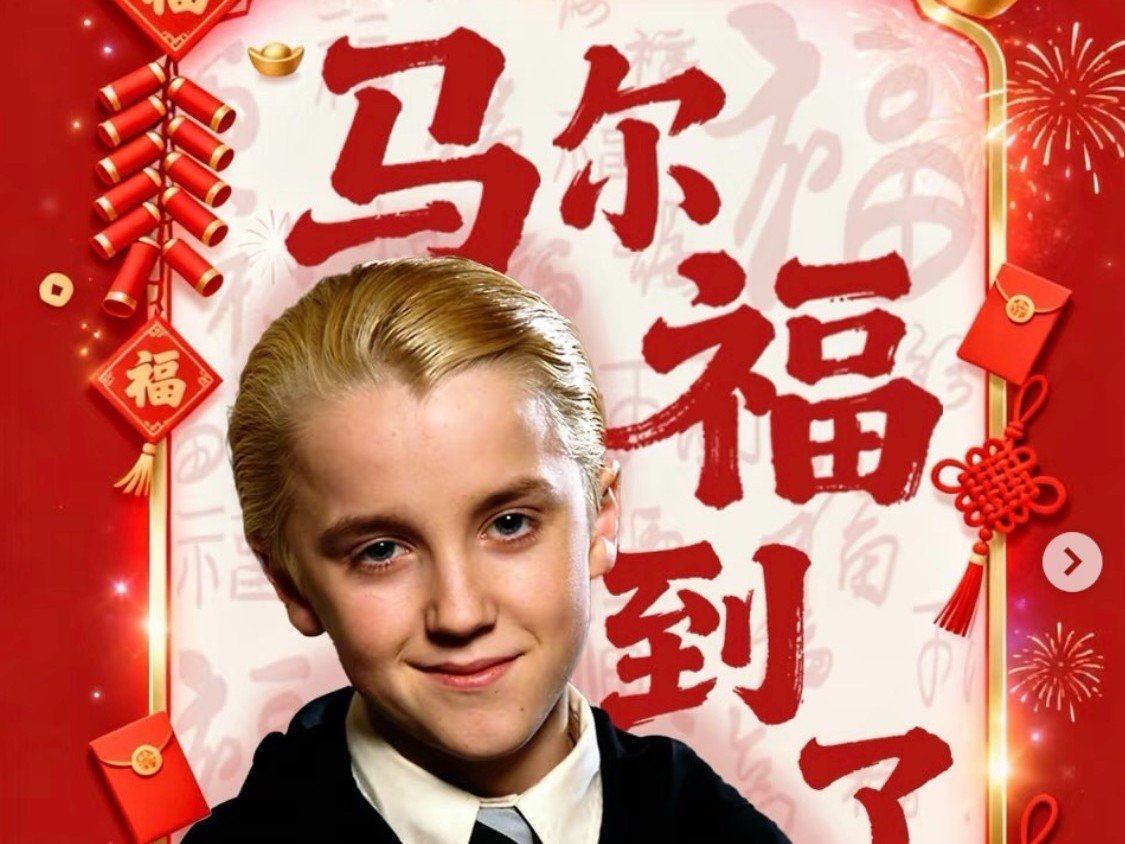
The Face of Lunar New Year 2026 - Draco Malfoy
FORTUNE COMES WITH THE HORSE
If you walk through a Chinese shopping district this February, the traditional Lunar New Year decorations look a bit different. Amidst the red lanterns and gold-trimmed zodiac symbols for the Year of the Horse, a surprising face has started appearing on shopfronts and smartphone wallpapers: the icy, platinum-blond sneer of Draco Malfoy.
The Harry Potter antagonist’s sudden rise to "lucky charm" status isn't about a sudden love for Slytherin. Instead, it’s the result of a linguistic coincidence that the internet has turned into a viral phenomenon.
In Mandarin, Malfoy’s name is transliterated as 馬爾福 (“ma er fu”).
The first character 馬 (“ma”) literally means “horse”
The final character 福 (“fu”) means “fortune” or “blessing”
Together, this sounds similar to auspicious phrases like 馬來福 (“ma lai fu”), which means “fortune comes with the horse,” creating an accidental but deeply appealing association between Malfoy and prosperity.
REBRANDING AND REDEMPTION
Images and videos of red Draco-themed decorations are flooding platforms like Douyin and Xiaohongshu (China’s version of TikTok and Instagram respectively). Searches such as “Malfoy Chinese New Year Wallpaper” are among the most popular, and typical designs combine Draco’s characteristic smirk with traditional good luck motifs. Many of these wallpapers carry playful captions like “pure blood blessings” and “pure blood’s wealth,” while festive Lunar New Year couplets riff on Hogwarts lore, promising to “add ten digits to your bank account” as if “adding ten points to Slytherin,” or even joking in aristocratic Malfoy fashion, “I will tell my father to give you red packets.”
The jokes about 'pure blood blessings' carry a sharp, unintended sting. In the Harry Potter universe, 'Pure Blood' is the ultimate status of the insider, a reference to the ones who belong. In contemporary China, status is everything. While Malfoy’s fictional pedigree is celebrated on red envelopes, North Korean defectors are branded with the status of 'illegal economic migrants,' a label that strips them of their rights and makes them targets for repatriation. A fictional villain is welcomed for his name while real refugees are hunted for their lack of papers.
SOMBER REALITY FOR NORTH KOREAN DEFECTORS IN CHINA
While Draco Malfoy’s unlikely ascent to mascot status offers a light-hearted cross-cultural laugh during the festival, the situation for North Korean defectors in China remains grim and deeply bitter. The absence of legal status and formal refugee recognition means that, even as families gather for Lunar New Year dinners and fireworks, many defectors spend the holiday in hiding. Cut off from their families and unable to travel, they avoid crowded streets amid heightened holiday surveillance in public spaces, confining themselves to cramped apartments to avoid police checks. With factories and many local businesses shuttered for the weeklong break, work disappears as well, leaving them isolated, invisible and fearful of arrest during a season defined by reunion and celebration.
Meanwhile, Christians who provide shelter, food or safe passage to North Korean defectors are closely monitored by the Chinese government, as authorities frame independent religious activity as a potential foreign threat. During major national holidays such as Lunar New Year, when China experiences the world’s largest annual human migration (with an estimated record-breaking 9.5 billion passenger trips expected over the 40-day Spring Festival travel rush this year), authorities increase security measures in transport hubs, neighborhoods and places of gathering. For defector communities, the result is a holiday that amplifies isolation as churches and faith groups that might otherwise organize shared meals or offer companionship limit gatherings to avoid attracting attention.
In 2026, Draco Malfoy, a cruel and prideful character created by J.K. Rowling, is warmly reimagined as a bringer of fortune, with his image adorning homes and malls across China. Yet real people escaping hardship lack even the basic dignity of refuge, while those motivated by faith to offer love and care to others are treated with suspicion and perceived as greater threats compared to a once-reviled villain. In a festival that celebrates renewal and good fortune, the irony is simply too difficult to ignore.